Have you ever heard someone describe an idea, action, plan, or situation as diabolical? The word can sound dramatic, and its meaning is often stronger than simply saying something is “bad.”
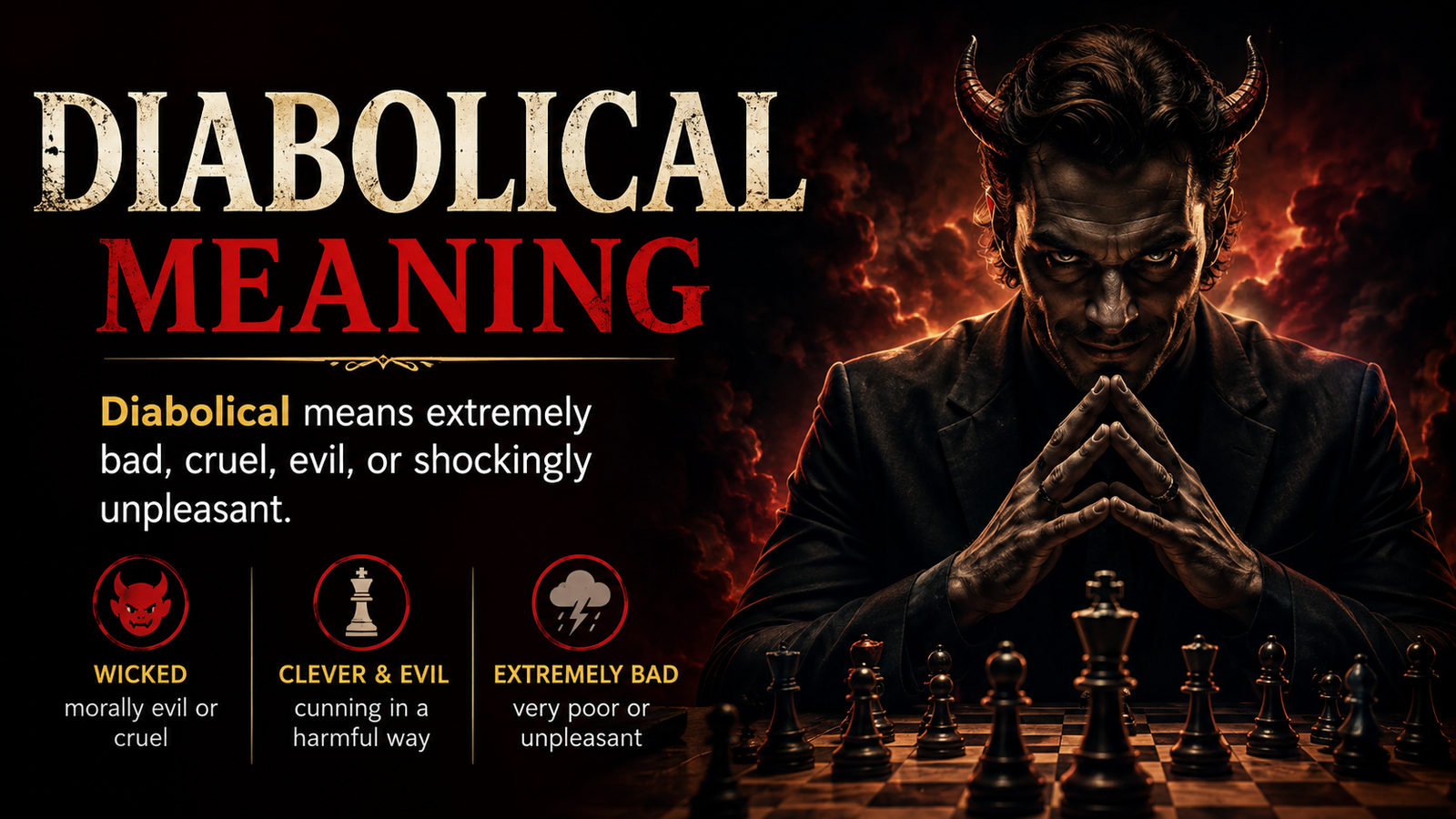
In simple English, diabolical means extremely bad, shocking, cruel, evil, or unpleasant. It can describe something genuinely wicked, but in everyday British English, people also use it informally to emphasize that something is exceptionally poor or terrible. For example, someone might say, “The service at that restaurant was diabolical,” meaning the service was extremely bad.
In simple English, diabolical means extremely bad, shocking, cruel, evil, or unpleasant. It can describe something genuinely wicked, but in everyday British English, people also use it informally to emphasize that something is exceptionally poor or terrible. For example, someone might say, “The service at that restaurant was diabolical,” meaning the service was extremely bad.
In simple English, diabolical means extremely bad, shocking, cruel, evil, or unpleasant. It can describe something genuinely wicked, but in everyday British English, people also use it informally to emphasize that something is exceptionally poor or terrible. For example, someone might say, “The service at that restaurant was diabolical,” meaning the service was extremely bad.
The word can also describe something associated with the Devil or something that seems devilish, evil, or morally wicked. In this sense, a person with a particularly cruel or cunning plan might be called a “diabolical mastermind.”
This guide explains the diabolical meaning, pronunciation, origin, examples, synonyms, antonyms, common usage, related words, and frequently asked questions in clear, simple English.
What Does Diabolical Mean?
Diabolical is an adjective with two closely related meanings.
First, it can mean extremely bad, unpleasant, or shocking. This is common in everyday speech, especially in British English. If someone says, “The weather was diabolical,” they may simply mean the weather was terribly unpleasant.
Second, diabolical can mean evil, cruel, or connected with the Devil. This meaning is more closely connected to the word’s historical and religious associations.
Cambridge Dictionary defines the word as meaning “extremely bad or shocking” in informal use and also as meaning evil or caused by the Devil.
Simple Definition
Diabolical = extremely bad, shockingly unpleasant, evil, or devilish.
The exact meaning depends on context.
For example:
- “That was a diabolical crime.”
Here, diabolical means extremely evil or cruel. - “The hotel service was diabolical.”
Here, it means extremely bad. - “He came up with a diabolical plan.”
Here, it suggests a clever but wicked or harmful plan.
Diabolical Pronunciation
The pronunciation of diabolical differs slightly between British and American English.
For American English, Cambridge gives:
/ˌdaɪ.əˈbɑː.lɪ.kəl/
The main stress falls on the syllable containing “bol.” When speaking the word, avoid rushing through all of its syllables. The middle part should receive the strongest emphasis.
What Part of Speech Is Diabolical?
Diabolical is an adjective.
An adjective describes a person, thing, action, idea, situation, or quality.
For example:
- a diabolical plan
- a diabolical crime
- a diabolical situation
- a diabolical villain
- a diabolical mistake
- diabolical conditions
The related adverb is diabolically, which means “in an extremely bad, shocking, wicked, or clever way.” Cambridge gives examples such as “diabolically clever” and “diabolically difficult.”
Diabolical Meaning in Simple English
If you want to understand diabolical without complicated dictionary language, think of it as a very strong word for something that is terrible or wicked.
Depending on the sentence, it can mean:
- extremely bad
- horrible
- shocking
- cruel
- evil
- wicked
- devilish
- dangerously clever
- unpleasant to an extreme degree
The word is stronger than ordinary words such as bad or unpleasant.
Compare these sentences:
“The food was bad.”
This tells us the food was not good.
“The food was terrible.”
This is stronger.
“The food was diabolical.”
This is even more dramatic. The speaker is emphasizing just how extremely bad the food was.
However, when describing a person or an action, diabolical can carry a much darker meaning.
Diabolical Meaning in Different Contexts
1. Diabolical Meaning for a Person
When diabolical describes a person, it usually suggests that the person is extremely evil, cruel, or morally corrupt.
Example:
“The villain was a diabolical character.”
This means the villain was exceptionally wicked or cruel.
The word can also suggest intelligence combined with evil intentions. Cambridge’s American Dictionary notes that the word can describe something very evil but often intelligent, as in the phrase “a diabolical genius.”
2. Diabolical Meaning for a Plan
A diabolical plan is a plan that is clever but harmful, cruel, or wicked.
Example:
“They created a diabolical plan to deceive their rivals.”
The sentence suggests that the plan was not simply clever. It had a sinister or malicious purpose.
3. Diabolical Meaning for a Situation
When describing a situation, diabolical can simply mean extremely bad.
Example:
“The working conditions were diabolical.”
This means the conditions were extremely poor or unacceptable.
This everyday usage does not necessarily mean anything supernatural or related to the Devil.
4. Diabolical Meaning in British English
In British English, diabolical is often used informally to mean extremely bad or shocking.
For example:
“The traffic was diabolical this morning.”
The speaker is not necessarily saying the traffic was evil. They are emphasizing that it was extremely bad.
Similarly:
“His driving is diabolical.”
This means his driving is extremely poor or dangerous. Cambridge specifically gives this type of everyday usage.
Origin of the Word Diabolical
The history of diabolical helps explain why the word has such a strong connection with evil.
The word ultimately comes through Latin diabolicus and Greek diabolikos, meaning something associated with the Devil or a slanderer. The English word developed from this religious and moral sense into the broader adjective we use today.
The connection becomes easier to see when you compare diabolical with the word Devil.
Historically, words derived from the same root were associated with the idea of the Devil, evil, accusation, or malicious behavior. Over time, English speakers expanded the word’s use. It could describe not only something literally associated with the Devil but also anything considered extraordinarily wicked or terrible.
Today, the original religious association remains important, but the everyday meaning is much broader.
Diabolical vs. Demonic
Diabolical and demonic are closely related, but they are not always interchangeable.
Demonic generally means wildly evil, cruel, or associated with demons. Cambridge lists diabolical and satanic among synonyms related to demonic.
Diabolical, on the other hand, has a particularly useful everyday meaning: extremely bad or shocking.
Compare:
“A demonic creature appeared in the story.”
This strongly suggests something supernatural or demon-like.
“The customer service was diabolical.”
This normally means the service was extremely poor.
So, while the words overlap, diabolical has a much wider everyday use.
Examples of Diabolical in Sentences
Here are several examples showing how the word works in natural English.
- The criminal carried out a diabolical act.Here, diabolical means extremely evil or cruel.
- The hotel room was in diabolical condition.Here, it means extremely poor.
- She developed a diabolical plan to expose her enemy.Here, the plan is clever but wicked or harmful.
- The weather was absolutely diabolical.Here, it means extremely unpleasant.
- He was known as a diabolical villain.Here, it describes someone exceptionally evil.
- The company’s customer service was diabolical.This means the service was extremely bad.
- It was a diabolical decision that harmed innocent people.Here, the word emphasizes the moral wrongness of the decision.
- The detective faced a diabolical criminal mastermind.The criminal is portrayed as both extremely wicked and intelligent.
- The journey became diabolical after the storm began.Here, the word means extremely difficult or unpleasant.
- That was a diabolically clever trick.
Here, the related adverb suggests that the trick was exceptionally clever, with an undertone of wickedness or mischief.
Synonyms of Diabolical
The best synonym depends on which meaning of diabolical you intend.
When Diabolical Means Evil
Possible synonyms include:
- evil
- wicked
- satanic
- demonic
- devilish
- sinister
- fiendish
- malevolent
- cruel
- vicious
For example:
Diabolical plan → wicked plan
Diabolical villain → evil villain
When Diabolical Means Extremely Bad
Possible synonyms include:
- terrible
- awful
- horrible
- dreadful
- appalling
- atrocious
- shocking
- abysmal
- awful
- unacceptable
For example:
“The service was diabolical.”
could become:
“The service was atrocious.”
The exact replacement depends on the situation and the level of intensity you want.
Antonyms of Diabolical
The opposite of diabolical also depends on context.
If diabolical means evil, antonyms include:
- good
- kind
- moral
- virtuous
- benevolent
- compassionate
- angelic
If diabolical means extremely bad, possible opposites include:
- excellent
- wonderful
- great
- pleasant
- good
- acceptable
- outstanding
- superb
For example:
“The service was diabolical.”
Opposite:
“The service was excellent.”
Common Phrases With Diabolical
The word commonly appears before nouns or adjectives.
Diabolical Plan
A diabolical plan is a wicked or harmful scheme.
Diabolical Genius
A diabolical genius is someone who is extremely clever while also being evil or morally questionable.
Diabolical Crime
A diabolical crime is an exceptionally cruel or shocking crime.
Diabolical Conditions
This usually means extremely poor or unpleasant conditions.
Diabolical Weather
This is often informal and means extremely bad weather.
Diabolically Clever
This phrase describes someone or something that is extraordinarily clever, often with an undertone of cunning or wickedness. Cambridge provides “diabolically clever” as an example of the related adverb.
Diabolically Difficult
This means extremely difficult.
For example:
“The final exam was diabolically difficult.”
The speaker is emphasizing that the exam was exceptionally hard.
Is Diabolical Always a Negative Word?
Yes, diabolical is strongly negative in tone, but the reason for the negativity can change.
Sometimes it describes moral evil:
“It was a diabolical act of cruelty.”
Sometimes it simply describes extremely poor quality:
“The internet connection was diabolical.”
Sometimes it describes cleverness with a sinister or mischievous edge:
“He had a diabolical idea.”
The surrounding words and situation tell you which sense the speaker intends.
Is Diabolical a Formal or Informal Word?
Diabolical can be used in both formal and informal contexts, although the “extremely bad” meaning is particularly common in informal speech.
In serious writing, it may describe something morally shocking:
“The investigation uncovered a diabolical pattern of abuse.”
In casual conversation, someone might say:
“The traffic today was diabolical.”
The second use is much more conversational.
Because the word is dramatic, it can also add emotional force to a sentence.
Diabolical vs. Terrible
These words overlap, but diabolical can be more expressive.
Terrible is extremely common and can describe almost anything bad.
Diabolical has an additional sense of evil, wickedness, or devilish behavior.
Compare:
“That was a terrible thing to do.”
This means the action was very wrong or harmful.
“That was a diabolical thing to do.”
This sounds stronger and suggests deliberate cruelty, wickedness, or shocking behavior.
When describing something ordinary, however, terrible is usually more natural.
Diabolical vs. Evil
Evil directly refers to serious moral wrong.
Diabolical can mean evil, but it can also simply mean extremely bad.
That distinction is important.
For example:
“The murderer committed an evil act.”
This directly describes moral wrongdoing.
“The weather was diabolical.”
This does not mean the weather was morally evil. It means the weather was exceptionally bad.
Therefore, diabolical is broader than evil.
How to Use Diabolical Correctly
Use diabolical before a noun when you want to describe something as extremely bad, wicked, shocking, or devilish.
Correct examples include:
- a diabolical plan
- a diabolical crime
- a diabolical villain
- diabolical conditions
- diabolical weather
- a diabolical mistake
- a diabolically clever idea
A useful tip is to consider the intensity of the situation. Diabolical is a strong adjective, so it may sound exaggerated when used for something only mildly inconvenient.
For example, saying:
“The pencil broke, which was diabolical.”
could sound humorous or deliberately dramatic.
But:
“The living conditions were diabolical.”
sounds much more natural because the situation is genuinely serious.
Frequently Asked Questions About Diabolical Meaning
What is the simple meaning of diabolical?
Diabolical means extremely bad, shocking, evil, cruel, or devilish. In informal British English, it can simply mean something is exceptionally poor or unpleasant.
Is diabolical a bad word?
Yes. Diabolical has a strongly negative meaning, although it is not necessarily a swear word. It is an adjective used to describe something extremely bad, evil, shocking, or unpleasant.
What does diabolical mean in slang?
In casual speech, especially British English, diabolical can be an emphatic way of saying extremely bad.
For example:
“The service was diabolical.”
This means the service was extremely poor.
What is a synonym for diabolical?
Depending on the context, synonyms include evil, wicked, demonic, satanic, devilish, terrible, horrible, atrocious, dreadful, and appalling.
What is the opposite of diabolical?
If it means evil, opposites include good, kind, moral, virtuous, and benevolent. If it means extremely bad, opposites include excellent, wonderful, superb, and outstanding.
Does diabolical mean evil?
Yes, it can mean evil or associated with the Devil. However, in everyday English it can also simply mean extremely bad or shocking.
Is diabolical stronger than terrible?
Usually, diabolical sounds more dramatic because it can suggest evil or wickedness as well as extreme badness. However, the strength depends on context and the speaker’s intention.
Can diabolical describe a person?
Yes. Calling someone diabolical can mean that they are extremely wicked, cruel, or cunning in a sinister way.
Can diabolical be positive?
Generally, no. It is a negative word. However, phrases such as “diabolically clever” may praise someone’s intelligence while still suggesting cunning, mischief, or wickedness.
Final Thoughts on Diabolical Meaning
The word diabolical is powerful because it has more than one everyday use. At its darkest, it means evil, wicked, cruel, or associated with the Devil. In ordinary conversation, particularly British English, it can simply mean extremely bad, unpleasant, or shocking.
The context makes the difference.
A diabolical crime is likely to be extremely evil. A diabolical plan may be wicked and cleverly designed. But diabolical weather usually just means terrible weather.
Understanding this distinction makes the word much easier to use naturally. If you see diabolical in a book, article, movie, conversation, or social media post, look at what it describes. That surrounding context will usually tell you whether the speaker means evil and devilish or simply extremely bad.
In short, diabolical is an intense adjective for something exceptionally bad, shocking, wicked, or unpleasant. It is useful when ordinary words like “bad” or “terrible” do not quite capture the speaker’s level of disapproval.