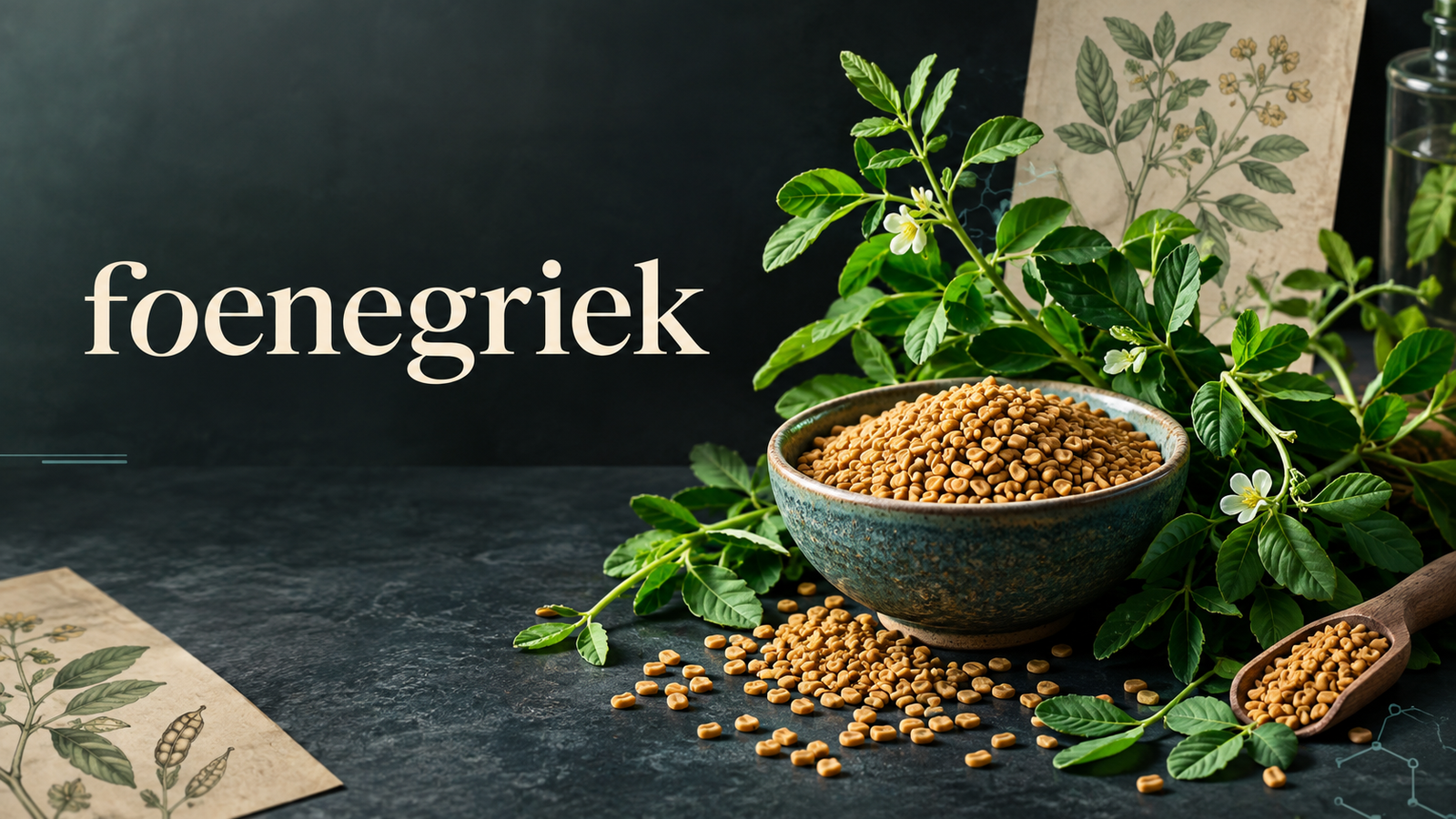
Foenegriek is a distinctive term associated with one of the world’s best-known culinary and medicinal plants: fenugreek, botanically identified as Trigonella foenum-graecum. Although the spelling “foenegriek” may appear unfamiliar to English-speaking readers, it points toward a plant with an exceptionally long history across food traditions, herbal practices, agriculture, and botanical research.
The plant behind foenegriek belongs to the Fabaceae, or legume, family. It is an annual herb cultivated for both its aromatic seeds and its leaves. Its seeds are especially recognizable because of their intense fragrance, slightly bitter flavor, and characteristic warm, maple-like aroma. The leaves are also valued as a culinary ingredient, particularly in South Asian cooking.
Modern research has expanded interest in foenegriek because the plant contains dietary fiber, proteins, galactomannans, saponins, alkaloids, flavonoids, polyphenols, and other naturally occurring compounds. Researchers have investigated these constituents in relation to nutrition, food science, glucose metabolism, lipid metabolism, inflammation, and other biological processes. However, scientific interest should not be confused with proof that the plant can treat or cure diseases.
The story of foenegriek is therefore much broader than a simple dictionary definition. It is a plant with botanical significance, culinary importance, agricultural value, cultural history, and an evolving scientific profile.
Foenegriek Biography Table
| Category | Details |
|---|---|
| Common English name | Fenugreek |
| Term | Foenegriek |
| Scientific name | Trigonella foenum-graecum L. |
| Plant family | Fabaceae |
| Plant type | Annual herb |
| Main parts used | Seeds and leaves |
| Native region | Mediterranean region and western Asia |
| Major culinary role | Spice, seasoning, leafy herb, food ingredient |
| Seed flavor | Bitter, aromatic, slightly maple-like |
| Leaf use | Fresh or dried culinary herb |
| Famous dried leaves | Kasuri methi |
| Important compounds | Galactomannan, trigonelline, saponins, 4-hydroxyisoleucine and other phytochemicals |
| Agricultural significance | Food crop, spice crop, nitrogen-fixing legume |
| Traditional uses | Culinary preparations and various traditional herbal practices |
| Modern research areas | Nutrition, glucose metabolism, food science, phytochemistry and pharmacology |
| Botanical genus | Trigonella |
| Life cycle | Annual |
| Primary commercial material | Seeds and dried leaves |
What Is Foenegriek?
Foenegriek refers to fenugreek, a plant known scientifically as Trigonella foenum-graecum L. It is a small annual herb whose seeds have been used as a spice and traditional plant ingredient for thousands of years.
The plant is particularly important in regions where herbs and spices are integrated deeply into everyday cooking. Its seeds may be roasted, ground, soaked, sprouted, or incorporated into spice mixtures. Its leaves can be eaten fresh or dried.
The word itself is especially interesting because different languages use different forms of the name fenugreek. Consequently, someone encountering foenegriek in a multilingual food label, search result, recipe, botanical reference, or product description may initially wonder whether it represents a separate plant.
It does not generally indicate a different species. The term is associated with fenugreek, whose accepted botanical identity is Trigonella foenum-graecum.
The plant has attracted scientific attention because its seeds and leaves contain numerous naturally occurring constituents. A recent review in the Journal of Agricultural and Food Chemistry describes fenugreek seeds as containing galactomannan and proteins alongside steroidal saponins, trigonelline, 4-hydroxyisoleucine, diosgenin, fixed oils, and aroma-active compounds.
The Botanical Identity of Foenegriek
From a botanical perspective, foenegriek belongs to the Fabaceae family, the same broad plant family that includes peas, beans, lentils, chickpeas, and many other legumes.
Its scientific name is Trigonella foenum-graecum L.
The genus Trigonella contains several species, but Trigonella foenum-graecum is the species most commonly associated with fenugreek as a culinary and traditional medicinal plant.
The plant is generally modest in size. Agricultural descriptions commonly place mature plants within a range of roughly 20 to 60 centimeters, although environmental and cultivation conditions can affect growth.
It produces trifoliate leaves, meaning that each leaf is divided into three leaflets. The flowers are relatively small and typically pale yellowish or whitish. After flowering, the plant produces elongated pods containing the seeds.
Those seeds are the part most frequently recognized commercially.
Why the Seeds of Foenegriek Matter
The seeds are the defining commercial component of foenegriek.
They are small, angular, yellowish-brown to golden in appearance, and highly aromatic. Their flavor is distinctive. Raw seeds can be strongly bitter, while roasting or incorporating them into cooked foods changes their sensory character.
One of their most notable qualities is their aroma.
Fenugreek seeds can produce a sweet, maple-like scent because of volatile aromatic constituents. This unusual combination of bitterness and sweetness helps explain why the spice can be recognizable even when used in relatively small quantities.
The seeds are also rich in compounds that have attracted food scientists and nutritional researchers.
Galactomannan is particularly important because it is a soluble polysaccharide associated with dietary fiber. The chemical composition of fenugreek seeds also includes proteins, lipids, minerals, and various secondary plant metabolites.
The exact nutritional and phytochemical profile can vary according to cultivar, growing conditions, processing method, extraction technique, and the part of the plant being analyzed.
Foenegriek and Its Leaves
Although seeds receive most of the attention, the leaves are equally important in several food traditions.
Fresh fenugreek leaves can be cooked as a leafy vegetable or incorporated into savory dishes. Dried leaves have an especially recognizable culinary identity in South Asian cuisine, where they are commonly called kasuri methi.
Dried leaves contribute an intense herbal aroma with a slightly bitter, savory quality.
They are frequently added toward the later stages of cooking because their fragrance can become an important part of the finished dish.
Unlike the concentrated seeds, which are often used for their spice character, leaves can function more like an aromatic herb.
This distinction gives foenegriek remarkable culinary versatility.
The History of Foenegriek
Fenugreek has a very long history of human use.
The National Center for Complementary and Integrative Health describes fenugreek as a clover-like herb associated with the Mediterranean region, southern Europe, and western Asia and notes that its seeds have been used as both a spice and a traditional medicine for thousands of years.
Its historical importance comes partly from its versatility.
A plant that could provide edible leaves, flavorful seeds, agricultural value, and traditional medicinal applications had obvious practical value for earlier societies.
Over time, fenugreek became established across different culinary and cultural systems. It appears in traditional food practices throughout South Asia, the Middle East, North Africa, and Mediterranean-associated regions.
The plant’s history also demonstrates how the categories of “food,” “spice,” and “medicine” were not always sharply separated.
For many traditional cultures, plants were simultaneously ingredients, household remedies, agricultural resources, and objects of botanical knowledge.
Foenegriek in South Asian Cuisine
South Asian cuisine is one of the most visible modern contexts for foenegriek.
Fenugreek seeds are used in spice blends, pickles, curries, vegetable preparations, breads, and other foods. They can be used whole or ground.
The leaves are equally significant.
Kasuri methi, made from dried fenugreek leaves, is widely used to add aroma to curries, vegetable dishes, breads, sauces, and rich gravies.
The spice can be powerful, so culinary preparation matters.
A small amount may contribute a recognizable aroma, whereas excessive quantities can make a dish noticeably bitter.
Roasting can also transform the flavor profile. Lightly toasted seeds can become more aromatic, but excessive heating can intensify bitterness or damage desirable aromatic characteristics.
Foenegriek in Middle Eastern and Regional Food Traditions
Fenugreek is also known in various Middle Eastern and North African food traditions.
Its seeds have historically been incorporated into breads, beverages, spice preparations, and other dishes.
Different cultures prepare the plant differently, demonstrating an important principle of food history: the identity of an ingredient does not determine a single universal flavor.
Preparation technique changes taste.
Grinding, soaking, sprouting, roasting, boiling, fermenting, and combining fenugreek with other ingredients can produce substantially different sensory experiences.
This is one reason foenegriek remains relevant to both traditional cooks and modern food researchers.
The Flavor Profile of Foenegriek
The flavor of foenegriek is difficult to compare with a single familiar spice.
Its seeds are characteristically bitter, aromatic, earthy, and slightly sweet.
The maple-like aroma is particularly unusual.
When used correctly, fenugreek can add depth rather than simply making a dish taste “spicy.” Its aromatic compounds interact with other ingredients, particularly toasted spices, onions, garlic, tomatoes, dairy products, legumes, and rich sauces.
The leaves have a somewhat different character.
Dried leaves offer a concentrated herbal aroma, while fresh leaves tend to be greener and more delicate.
The difference between seed and leaf is therefore important when interpreting a recipe that mentions foenegriek.
Nutritional Composition
Fenugreek is nutritionally interesting because its seeds contain a combination of macronutrients and bioactive plant compounds.
Research reviews describe fenugreek seeds as containing substantial carbohydrate content, much of which is associated with dietary fiber, as well as meaningful levels of protein and smaller quantities of lipids.
The seeds also contain soluble fiber in the form of galactomannan.
The nutritional composition of fenugreek can vary depending on the plant variety, geographic origin, cultivation conditions, processing, and analytical method.
This variability is common among botanical foods and explains why individual nutritional databases may report somewhat different values.
Fenugreek leaves have a different nutritional profile from the seeds and contribute plant nutrients when consumed as part of a balanced diet.
Galactomannan in Foenegriek
Galactomannan is one of the most interesting components of fenugreek.
It is a polysaccharide that functions as a form of soluble dietary fiber.
When exposed to water, soluble fibers can absorb liquid and contribute to viscosity. This property has attracted considerable attention from food scientists.
Fenugreek-derived galactomannan has been investigated for its ability to influence the physical properties of foods.
Researchers have explored its potential role in food formulation, texture modification, fat replacement, stabilization, and other technological applications.
The importance of galactomannan demonstrates that foenegriek is not merely a spice. It can also serve as a source of functional food ingredients.
Important Phytochemicals
Fenugreek contains a wide range of naturally occurring phytochemicals.
Among the compounds frequently discussed in the scientific literature are:
- Trigonelline
- Diosgenin and related steroidal saponins
- 4-hydroxyisoleucine
- Galactomannan
- Flavonoids
- Polyphenols
- Other saponins
- Volatile aromatic compounds
These compounds do not all behave identically.
Some contribute to flavor or aroma, while others are studied because of their biological activity in laboratory or clinical research.
The presence of a bioactive compound does not automatically establish that eating a food containing that compound produces a therapeutic effect.
That distinction is essential when interpreting claims about foenegriek.
Foenegriek and Blood Sugar Research
One of the most extensively investigated areas involving fenugreek is glucose metabolism.
Researchers have studied whether fenugreek preparations can influence blood glucose levels, particularly in people with type 2 diabetes.
Some clinical research has reported reductions in blood glucose or improvements in certain metabolic measurements. However, study quality, preparation type, dosage, sample size, and study design vary considerably.
The NCCIH states that research suggests fenugreek may help lower blood sugar in people with type 2 diabetes, but also notes that many studies have not been of high quality.
That means foenegriek should not be presented as a proven replacement for diabetes medication or medical treatment.
Instead, it is more accurate to describe glucose regulation as an active area of research.
Foenegriek and Digestive Traditions
Fenugreek has traditionally been used in various cultures for digestive purposes.
Its fiber content provides a plausible nutritional explanation for some interest in digestive health, although traditional use and clinical evidence are not equivalent.
Different preparations may also behave differently.
Whole seeds contain structural components that are absent or altered in some extracts. Powdered seed, tea, standardized extract, and culinary quantities cannot automatically be treated as interchangeable.
Modern research continues to examine the relationship between fenugreek’s fiber, phytochemicals, and gastrointestinal effects.
Foenegriek and Women’s Traditional Health Practices
Fenugreek has a long history of use in traditional women’s health practices.
Historically, preparations of the plant have been used for menstrual discomfort, reproductive health, and lactation.
Modern research has investigated some of these traditional claims.
For menstrual discomfort, available evidence remains limited. The NCCIH describes the evidence as low quality and says the effects remain uncertain.
Research concerning breastfeeding and milk production has also produced mixed results.
This distinction between historical practice and modern clinical evidence is important.
A traditional reputation can explain why researchers study a plant, but it does not by itself prove that the plant has a particular medical effect.
Foenegriek and Cholesterol Research
Another area of scientific interest is lipid metabolism.
Some studies have investigated whether fenugreek preparations can influence cholesterol or triglyceride levels.
The proposed mechanisms include the role of soluble fiber and other bioactive constituents.
However, results vary depending on the preparation and study design.
The broader research literature describes fenugreek as a promising functional plant, but further well-designed clinical studies are needed to establish the size and reliability of specific health effects.
Antioxidant and Anti-Inflammatory Research
Fenugreek contains polyphenols, flavonoids, and other compounds with antioxidant activity in experimental systems.
Laboratory research has investigated antioxidant and anti-inflammatory properties of extracts and isolated constituents.
These findings are scientifically interesting because oxidative stress and inflammation are involved in many biological processes.
Nevertheless, laboratory activity does not automatically translate into a clinically meaningful effect in humans.
A substance can show antioxidant activity in a test tube while having a much smaller or different effect after digestion and metabolism.
Therefore, claims about foenegriek should distinguish laboratory findings from human clinical evidence.
Traditional Medicine and Foenegriek
Traditional medicine has used fenugreek for a wide variety of purposes.
Historical applications have included digestive complaints, appetite, menstrual discomfort, respiratory symptoms, skin problems, and lactation.
The European Medicines Agency lists fenugreek seed among herbal medicinal materials evaluated in relation to areas including loss of appetite, skin disorders, and minor wounds.
Such documentation provides evidence of traditional and regulatory interest, but it should not be interpreted as proof that every historical use has been clinically established.
Traditional medicine is valuable as a source of cultural and historical knowledge, while clinical medicine requires evidence from appropriately designed studies.
Safety of Foenegriek
Foenegriek is generally considered suitable for most adults when consumed in the amounts normally found in food.
However, concentrated supplements and large quantities are a different matter.
The NCCIH reports that potential side effects can include diarrhea, nausea, digestive discomfort, and other gastrointestinal symptoms. Larger doses may lower blood sugar excessively, and allergic reactions can occur.
Anyone taking medication should therefore consider possible interactions before using concentrated fenugreek products.
This is especially relevant for people taking medicines that affect blood glucose or blood clotting.
Pregnancy Considerations
Pregnancy is an especially important area of caution.
The NCCIH states that fenugreek is not considered safe during pregnancy in quantities greater than those found in food and notes associations with increased risks of birth defects.
Therefore, the ordinary culinary use of a spice should not be confused with concentrated supplements, extracts, or medicinal doses.
Pregnant individuals should consult a qualified healthcare professional before using concentrated herbal products containing foenegriek.
Allergies and Cross-Reactivity
Fenugreek can cause allergic reactions in susceptible individuals.
This is particularly relevant because people sometimes assume that a plant-based product is automatically harmless.
Food allergies can be serious.
Scientific reviews have reported allergic reactions associated with fenugreek, including respiratory and skin reactions. Some evidence also suggests potential cross-reactivity involving people with allergies to related legumes such as peanuts or chickpeas.
Anyone with known food allergies should check ingredients carefully and seek professional guidance when introducing concentrated herbal products.
Foenegriek as an Agricultural Crop
Fenugreek has value beyond cooking and herbal traditions.
It is a legume and can participate in nitrogen fixation through associations with soil microorganisms.
This characteristic contributes to its agricultural interest.
The plant can be grown as a relatively short-duration crop and is adapted to several climatic environments.
The Indian Council of Agricultural Research describes fenugreek as an annual herb cultivated for both seeds and leaves and notes its importance as a spice crop.
Agricultural interest in foenegriek therefore comes from its multiple outputs: seeds, leaves, flavor compounds, food ingredients, and potentially useful phytochemicals.
Growing Foenegriek
Fenugreek generally prefers relatively mild conditions and well-drained soil.
It is often cultivated as a cool-season crop in suitable regions.
The plant does not require the enormous growing period associated with many perennial crops. Under appropriate conditions, it can mature within a few months.
Seeds are normally harvested when pods mature and change color.
Farmers must balance moisture, temperature, soil quality, plant density, and disease management.
Like other crops, productivity depends heavily on local conditions and cultivar.
Foenegriek and Sustainable Agriculture
The agricultural characteristics of fenugreek have generated interest in sustainable cropping systems.
As a legume, it has a relationship with nitrogen-fixing microorganisms, allowing it to contribute to soil nutrient dynamics.
Its relatively short growth cycle and multiple uses also make it interesting as a diversified agricultural crop.
However, sustainability is never determined by the identity of a crop alone.
Water availability, fertilizer use, transportation, soil management, crop rotation, processing requirements, and local agricultural conditions all influence environmental performance.
Industrial Uses of Fenugreek
Fenugreek has uses beyond household kitchens.
Its seeds have been studied as sources of hydrocolloids and functional ingredients.
Galactomannan, in particular, has attracted interest for its thickening and stabilizing properties.
Food manufacturers and researchers have investigated fenugreek-derived ingredients in bakery products, meat products, beverages, functional foods, and other formulations.
The seed’s aromatic compounds also make it relevant to flavoring applications.
Its phytochemicals have generated interest in nutraceutical and pharmaceutical research as well.
The modern commercial identity of foenegriek is therefore multidimensional.
Foenegriek in Modern Food Science
Modern food science is increasingly interested in ingredients that provide both nutrition and functional properties.
Fenugreek fits this category because its seeds combine fiber, protein, phytochemicals, and distinctive flavor.
Recent scientific literature has examined the relationship between extraction methods and the chemical composition and functionality of fenugreek-derived ingredients. The processing method can influence which compounds are retained and how the resulting material behaves in food systems.
This is important because “fenugreek extract” is not a single standardized substance.
Two products may differ significantly depending on which part of the plant was used, how it was processed, which compounds were concentrated, and how the final product was standardized.
Whole Seeds Versus Supplements
Whole foenegriek seeds and concentrated supplements should not be treated as equivalent.
A culinary serving generally contains a relatively small quantity of the spice.
A supplement may contain a concentrated extract designed to deliver larger amounts of particular constituents.
This difference can change both potential effects and potential risks.
The same principle applies to teas, powders, capsules, standardized extracts, and tinctures.
Consumers should therefore read product labels carefully and consider the intended use rather than assuming every form of fenugreek has the same properties.
How Foenegriek Is Commonly Used in Cooking
There are several traditional ways to use fenugreek.
Whole Seeds
Whole seeds can be toasted lightly and added to spice mixtures, pickles, curries, and other savory dishes.
Because the seeds can be intensely bitter, moderation is important.
Ground Seeds
Grinding makes the spice easier to distribute throughout a dish.
Ground fenugreek is sometimes included in spice blends and seasoning mixtures.
Fresh Leaves
Fresh leaves can be cooked with vegetables, grains, legumes, or meat-based dishes.
Dried Leaves
Dried leaves are especially aromatic and can be crumbled over prepared foods.
Sprouted Seeds
Fenugreek seeds can also be sprouted under controlled food-preparation conditions.
Sprouting changes the physical and chemical profile of seeds and can influence flavor and digestibility.
How to Reduce the Bitterness
The bitterness of foenegriek is one of its defining characteristics, but preparation can affect how strongly it appears.
Using small quantities is the simplest approach.
Light roasting can change the aromatic profile.
Combining fenugreek with ingredients such as onions, tomatoes, yogurt, legumes, or other spices can also balance its bitterness.
Overheating the seeds, however, can make the flavor harsh.
Culinary experience with fenugreek often involves learning how much to use rather than treating it like a mild herb.
The Aroma of Foenegriek
Few culinary spices have an aroma quite like fenugreek.
Its scent may remind some people of maple syrup, toasted grain, caramel, dried herbs, or roasted spices.
This unusual aroma comes from naturally occurring volatile compounds.
It can be especially prominent in dried seeds and becomes more noticeable when the seeds are crushed or heated.
The distinctive fragrance is one reason fenugreek can influence the sensory identity of an entire dish even when used in a relatively small amount.
Why Foenegriek Has Multiple Names
Plant names change across languages and regions.
A plant may have a scientific name, an English common name, regional names, historical names, culinary names, and names used in local dialects.
This can create confusion when people search for ingredients online.
Foenegriek belongs to this broader naming tradition.
Using the scientific name Trigonella foenum-graecum is often the clearest way to identify the plant precisely.
This botanical naming system helps distinguish the species from unrelated herbs that may have similar common names.
Foenegriek and Botanical Classification
The scientific classification can be summarized as follows:
Kingdom: Plantae
Family: Fabaceae
Genus: Trigonella
Species: Trigonella foenum-graecum
The Fabaceae family is one of the most economically important plant families.
It includes many food crops and plants with agricultural importance.
Fenugreek’s position within this family helps explain its seed structure, nitrogen-fixing relationships, and broader agricultural significance.
Research Into Fenugreek’s Bioactive Compounds
Modern researchers continue to examine compounds found in fenugreek.
Trigonelline is an alkaloid that has attracted considerable scientific attention.
4-hydroxyisoleucine is an unusual amino-acid derivative that has been investigated for possible relationships with glucose and insulin metabolism.
Diosgenin and related steroidal saponins have also attracted attention because of their chemical properties and potential industrial significance.
Galactomannan is especially relevant to nutrition and food technology because of its fiber and functional characteristics.
The combination of these compounds makes foenegriek a particularly interesting subject for phytochemical research.
What Scientific Research Can and Cannot Tell Us
Scientific research on foenegriek has expanded substantially, but careful interpretation remains necessary.
A laboratory experiment can identify a biological mechanism.
An animal experiment can provide clues about possible physiological effects.
A small human trial can offer preliminary evidence.
A large, well-designed randomized clinical trial can provide stronger evidence.
Systematic reviews and meta-analyses can help assess the overall evidence.
These levels of evidence are not interchangeable.
For example, a compound demonstrating antioxidant activity in a laboratory does not prove that consuming fenugreek prevents a specific disease.
Likewise, a small clinical study reporting a positive result does not necessarily establish a universally effective treatment.
This distinction is particularly important when reading online claims about herbal products.
Is Foenegriek a Medicine?
Foenegriek is first and foremost an edible plant and culinary ingredient.
It also has a long history in traditional medicine.
Modern regulatory and scientific sources recognize particular traditional applications, while evidence for some proposed therapeutic uses remains incomplete.
The European Medicines Agency has evaluated fenugreek seed as a herbal medicinal material in specific traditional-use contexts.
However, a person should not replace prescribed medical treatment with fenugreek without discussing the decision with an appropriate healthcare professional.
Foenegriek and Everyday Nutrition
For many people, the most straightforward way to consume fenugreek is as a food ingredient.
Used in ordinary culinary quantities, it can contribute aroma, flavor, fiber, and plant compounds to meals.
It can also add variety to a diet that already contains vegetables, legumes, whole grains, herbs, spices, and other nutrient-rich foods.
This food-first perspective is important because many health discussions become unnecessarily complicated when an ordinary spice is presented primarily as a supplement.
The culinary role of foenegriek remains one of its most enduring qualities.
Frequently Asked Questions About Foenegriek
What is foenegriek?
Foenegriek refers to fenugreek, a plant scientifically known as Trigonella foenum-graecum. It is an annual legume cultivated for its aromatic seeds and leaves and used extensively as a spice and traditional herbal ingredient.
Is foenegriek the same as fenugreek?
Yes. Foenegriek is associated with the same plant commonly known in English as fenugreek. The botanical identification is Trigonella foenum-graecum L.
What does foenegriek taste like?
The seeds have a distinctive bitter, earthy and aromatic flavor with a characteristic sweet, maple-like scent. The leaves have a greener herbal profile, particularly when fresh.
What are the main parts of foenegriek used?
The seeds and leaves are the principal parts used in food. Seeds are commonly used as a spice, while fresh or dried leaves are used as herbs.
What is kasuri methi?
Kasuri methi refers to dried fenugreek leaves commonly used in South Asian cooking. They provide a concentrated aromatic and slightly bitter flavor.
Does foenegriek contain fiber?
Yes. Fenugreek seeds contain significant dietary fiber, including galactomannan, a soluble polysaccharide that has attracted attention in both nutrition and food science.
Is foenegriek good for blood sugar?
Research has investigated fenugreek for blood glucose management, and some studies have reported possible improvements. However, evidence quality varies, and the NCCIH states that there is not enough high-quality evidence to establish it as a treatment.
Can foenegriek be used during pregnancy?
Concentrated or medicinal amounts should not be assumed to be safe during pregnancy. The NCCIH specifically advises against fenugreek in amounts greater than those normally found in food during pregnancy because of safety concerns.
Can foenegriek cause side effects?
Yes. Reported effects can include digestive discomfort, diarrhea, nausea, and other gastrointestinal symptoms. Larger quantities may also affect blood sugar, and allergic reactions are possible.
Is foenegriek used in Indian cooking?
Yes. Fenugreek seeds and leaves are widely used in Indian cuisine. Dried fenugreek leaves, known as kasuri methi, are particularly popular as an aromatic ingredient.
Why does foenegriek smell like maple syrup?
Fenugreek seeds contain aromatic compounds that can produce a characteristic maple-like scent. This unusual fragrance is one of the plant’s most recognizable sensory features.
Is foenegriek a legume?
Yes. Trigonella foenum-graecum belongs to the Fabaceae family, the botanical family that includes numerous legumes.
Can foenegriek be grown at home?
Yes, fenugreek can be grown in suitable conditions. It generally prefers well-drained soil and moderate growing conditions. Its relatively short growth cycle makes it suitable for small-scale cultivation.
What is the scientific name of foenegriek?
The scientific name is Trigonella foenum-graecum L.
Is foenegriek used only as a spice?
No. It is used as a spice, leafy herb, food ingredient, traditional herbal material, agricultural crop, flavoring source, and subject of nutritional and pharmacological research.
The Continuing Relevance of Foenegriek
The enduring significance of foenegriek lies in its unusual combination of simplicity and complexity.
At first glance, it is merely a small herb with aromatic seeds.
A closer examination reveals a plant connected to ancient food traditions, modern agriculture, food chemistry, phytochemistry, traditional medicine, and contemporary clinical research.
Its seeds contain compounds that influence flavor and texture while also attracting scientific attention. Its leaves provide an important culinary herb. Its agricultural identity as a legume gives it additional relevance. Its long history of use provides researchers with a substantial ethnobotanical record to investigate.
Yet the most responsible understanding of foenegriek is neither to dismiss it as an ordinary spice nor to portray it as a universal natural remedy.
It is better understood as a historically important food plant with a remarkably diverse chemical composition and a broad range of documented uses.
That perspective leaves room for both tradition and science.
As research continues, future studies may clarify which of fenugreek’s traditional applications have meaningful clinical value, which compounds are responsible for particular effects, how preparation changes biological activity, and how its functional ingredients can be used in modern food systems.
For readers encountering the term foenegriek for the first time, the essential fact is simple: behind the unfamiliar word is a familiar and globally significant plant, Trigonella foenum-graecum, whose seeds and leaves have traveled through centuries of cuisine, agriculture, traditional knowledge, and scientific




2 thoughts on “Foenegriek: Biography, Meaning, History, Uses, Benefits, and What You Should Know”