
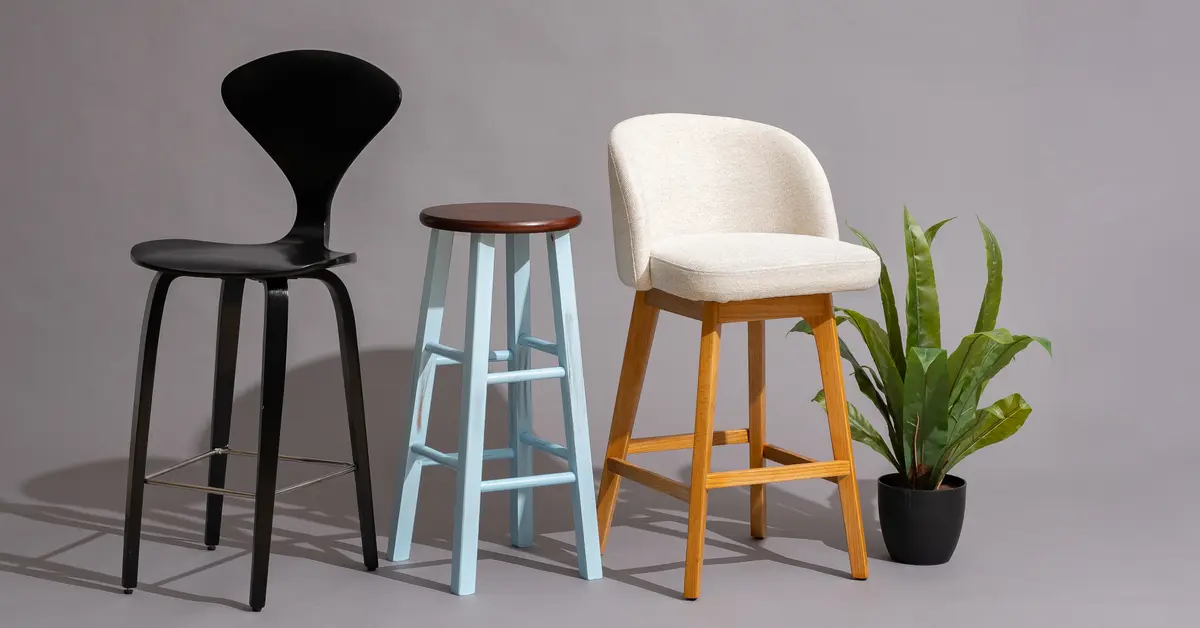
A new seat cover can make an old bar stool look ready for another season. It cannot establish that the frame, footrest, or swivel is suitable to keep using. Begin the repair-or-replace decision with the complete stool, then price cosmetic work only for pieces that the appropriate assessment finds suitable to retain.
Separate the condition decision from the appearance and cost comparisons. First establish which stools are suitable to retain. Then price the complete seat work for those pieces against viable replacements. Transport, fitting, repeat visits, and downtime belong beside the upholstery amount. The cheapest cover alone does not describe what it will cost to return a finished stool to the bar.
Assess the complete stool before pricing the seat
Start with an inspection of the restaurant bar stools under consideration, using the manufacturer’s guidance and qualified help where needed. Record each item’s model, condition, and unresolved issues. A clean-looking frame is not proof that the structure or mechanisms are sound. Keep suspect stools out of service until the appropriate assessment and any authorized work are complete.
For stools suitable to retain, ask whether compatible replacement seats and approved attachment hardware are available. Confirm the exact model and configuration instead of ordering by appearance alone. The replacement needs to fit and perform as intended, with the relevant instructions and warranty terms understood. If compatibility cannot be established, include a complete replacement stool in the comparison.
Specify the cushion and covering as one compatible assembly. New fabric over filling that needs replacement may not reproduce the approved sample. Have the supplier or qualified upholsterer identify the suitable materials, finished dimensions, and attachment method. Those details belong in the quote so the buyer is comparing the intended result, including what happens beneath the visible cover.
Match what the eye actually compares
Compare the proposed seat as part of the row, under the bar’s lighting. Several details can make an otherwise similar replacement stand out:
- Color and sheen, since gloss vinyl beside a matte one reads as a mismatch even in the same shade
- Seat height after installation, because a thicker cushion can lift one stool above its neighbors
- Seat profile and edge, whether flat, dished, or finished with a rolled welt
- Stitching and welt color, which catch the light at the edge of every seat
Place a completed sample beside the stools that will remain unchanged. Examine it from the guest’s approach and from a seated position, including the frame finish, seat profile, and finished height. A fabric swatch cannot show that relationship. Approving the assembled example gives the upholsterer a clearer reference than agreeing to a color while leaving the cushion’s shape unresolved.
All at once, or one at a time
An all-at-once program can simplify appearance matching; phases can spread the work and downtime. Build either schedule from the condition assessment, with only suitable stools remaining in use. Ask how the specified materials will be supplied across the planned interval. If later availability cannot be confirmed, include that uncertainty before deciding that the first installment represents the whole project.
For a phased program, decide where the newly finished seats will go after each collection returns. Compare grouping them in one section with placing them among the retained stools, using the approved sample. Mark the chosen positions on the work list. Staff can then restore the intended arrangement instead of distributing the returning pieces wherever there is an empty place.
Price a phased program through its final stage before choosing its first installment. Repeated collection, installation, or material orders may change the total, and later matching availability needs confirmation. State which stools belong to each phase and what happens if the specified material becomes unavailable. Otherwise, a temporary mixture can become the permanent result without anyone making that choice deliberately.
Specify the cover for traffic as well as color
The Association for Contract Textiles publishes voluntary abrasion guidelines for commercial textiles, including high-traffic applications. Ask how the proposed material is specified for the intended use. Abrasion results are only part of the assessment and do not predict service life on their own. Cleaning compatibility, construction, and other performance characteristics also belong in the comparison.
Compare the material’s care instructions with the restaurant’s actual cleaning process before ordering. Identify any product or method the covering cannot accept and resolve the mismatch with the supplier. Keep the selected filling, fabric, and performance information in the quotation. A substitute that looks similar should receive the same review rather than inherit approval from its color.
Fire rules follow the seat, whatever the stool’s age
For upholstered furniture within its scope, the federal flammability standard incorporates California TB 117-2013 and covers furniture manufactured, imported, or reupholstered from its effective date. Have the supplier or upholsterer identify the requirements applicable to the proposed work. A seat’s old manufacturing date does not by itself settle the treatment of a new upholstery project.
Agree who is responsible for the finished product’s compliance, documentation, and required labeling. A fabric claim alone should not be treated as proof that every aspect of the completed work has been addressed. Keep the relevant records with the inventory entry and confirm any project-specific questions with the responsible qualified adviser or authority before work begins.
Compare the complete costs of both options
Consider a hypothetical order for twelve stools. Replacement seats at $90 each, plus $180 for collection and fitting, total $1,260. New stools at $125 each, plus $120 delivery, total $1,620. The apparent difference is $360. Check what each quote includes before relying on that saving, including any assessment, removal, or additional work that has not yet been priced.
Put itemized options on the same basis. The replacement-seat route needs its assembly, fitting, transport, and necessary removal costs; the new-stool route needs delivery and setup. Include documented temporary seating or downtime costs where relevant, with assumptions labeled separately. That gives the price difference a traceable basis without relying on a guessed number of extra years from a new covering.
Use condition findings to decide what stays
Give the assessor the complete record for each affected stool before authorizing the order. Notes should identify observed conditions, with photographs where useful, so the person reviewing them can locate the problem. Examples include:
- Cracks or unexpected movement at welds, joints, or attachment points.
- Grinding, sticking, or unexpected movement in a swivel mechanism.
- Bent or damaged footrests and other visible component changes.
- Bent legs, missing components, or instability that has not been resolved through the approved procedure.
Use the assessment to divide the stock into suitable repair candidates and items needing replacement. Price the viable work for each group, then complete the required checks before returning any repaired stool to use. A mixed outcome may be the right purchasing decision. The appearance plan can accommodate it once the condition and compatibility questions have been settled.
Judge the result beyond the matching covers
At handover, compare the finished stools with the approved sample and the written scope. Confirm the required inspections, labeling, and maintenance records, then inspect the full row in the restaurant. Appearance matching and readiness for use are separate checks. Both should be resolved before a newly covered seat returns to the place that guests will occupy.
Keep the completed scope against each stool’s inventory record. The next buyer needs to know which components were replaced, which were retained, and what the work cost in full. A matching new cover can conceal very different maintenance histories underneath. Preserving that distinction makes the next refresh easier to assess from the actual furniture rather than its appearance alone.
