
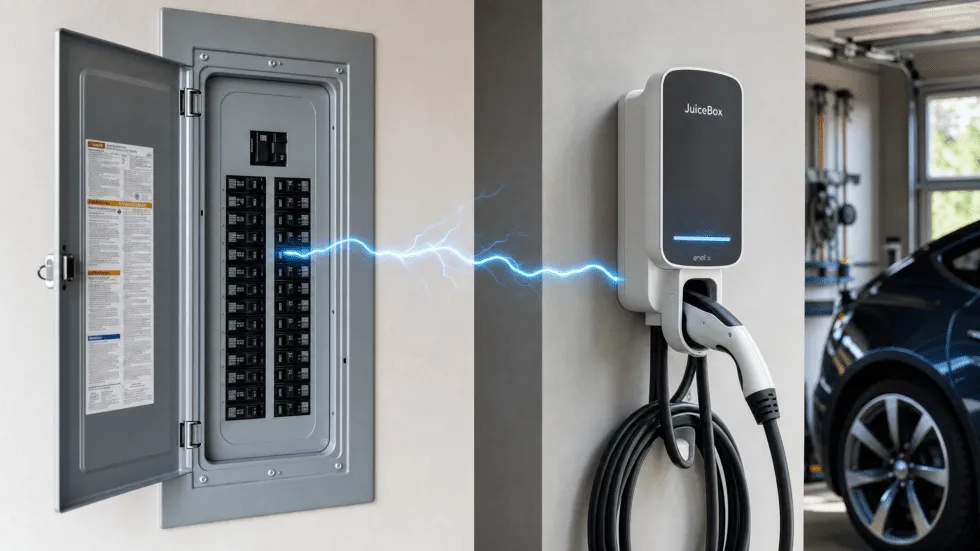
Adding a Level 2 EV charger, a heat pump, or an induction range can push a home’s electrical system beyond what it was built to deliver. Many houses still run on 60- or 100-amp service, with panels that feel full and breakers that already trip during heavy use. The right upgrade path is not guesswork. It starts with a real load calculation, then a choice between a subpanel, energy management, or a full service upgrade. This guide walks through the key decisions, common mistakes, and code-driven details that shape safe, durable results so that you can plan an EV-ready home without surprises during permitting or inspection.
- Start With a Real Load Calculation, Not Guesswork
A proper load calculation totals nameplate ratings, applies demand factors, and considers continuous loads at 125 percent. It weighs 120-volt circuits against 240-volt appliances, includes required small appliance and laundry circuits, and accounts for seasonal equipment like heat pumps or electric water heaters. A resource like an Electrician in Portland can explain what your local permitting office expects and why coincident loads matter more than simply adding up every appliance at its maximum draw.
Common errors include adding tandem breakers to “make room,” counting everything at 100 percent, or skipping manufacturer limits on bus and main breaker ratings. Check the panel label for its amperage and whether it allows tandem breakers. Remember, an EV charger is a continuous load, so a 32-amp charger needs a 40-amp two-pole breaker. An accurate load calc often shows you can add a subpanel and manage loads today, or, if you are planning an electric range and heat pump soon, that a service upgrade is the cleaner long-term fix.
- Subpanel, Load Management, or Full Service Upgrade?
When the main panel is cramped or inconveniently located, a garage subpanel fed by a 60- or 100-amp feeder can simplify dedicated circuits for an EV charger, workshop tools, or a heat pump condenser. The feeder size must match the load calculation, conductor gauge, and breaker rating. Energy management devices that monitor the main lugs can automatically shed EV charging when the house nears its limit, allowing a Level 2 charger on a smaller service without nuisance trips. That tradeoff reduces immediate disruption but relies on electronics and leaves less headroom for future electrification.
A full service upgrade to 200 amps increases capacity for today’s EV charger and tomorrow’s electrified kitchen. It usually involves a new meter base, service mast or conductors, a 200 amp panel, and an updated grounding electrode system. Coordination with the utility is often required, especially for overhead drops or underground laterals. This approach requires more permitting and scheduling, but it avoids daisy-chained solutions and leaves room for future upgrades. If the long view includes an induction range, a dryer, and power for a backyard office, the upgrade can be simpler than repeated partial fixes.
- Wiring the EV Circuit: Breakers, Wire Size, and Protection
Most Level 2 chargers require a dedicated 240-volt, two-pole breaker sized at 125 percent of the charger’s continuous load. A 40-amp breaker typically pairs with 8 AWG copper or 6 AWG aluminum, but long runs may require upsizing to limit voltage drop. Choose between a hardwired EVSE and a NEMA 14-50 receptacle. Garages usually need GFCI protection, and some jurisdictions require it even for hardwired EVSE. If the EVSE has built-in ground-fault protection, follow the manufacturer’s instructions to avoid nuisance tripping when pairing it with a GFCI breaker or device.
Many living spaces require AFCI, and some code cycles require residual-function protection that combines AFCI and GFCI in certain areas. If you install a receptacle, run a four-wire circuit (hot, hot neutral, ground) to a 14/50, and ensure the box fill and device ratings match the conductor gauge. UNM-BM B only where allowed and protected from damage;ge, switch to conduit with THHN/THWN where exposure or local rules require it, and label the breaker and receptacle with the EVSE’s maximum charging current.
- Grounding, Bonding, and Panel Space: Hidden Limits That Matter
Grounding and bonding are not paperwork details. The grounding electrode conductor must be correctly sized and connected to grounding electrodes, often including a water pipe and ground rods. In subpanels, isolate the neutral bar and bond the ground bar to the enclosure. Leaving the bonding screw in a subpanel is a common mistake that creates parallel neutral-ground paths and unpredictable fault behavior. Proper separation improves safety and helps GFCI and AFCI devices operate as designed.
Space inside the panel can be the limiting factor even when amperage is adequate. Follow the panel’s directory for where tandem breakers are allowed, use listed handle ties on multiwire branch circuits, and do not double lug neutrals under one terminal. AFCI and GFCI breakers are often full size and deeper than standard breakers, which can crowd conductors. Keep the deadfront intact, torque lugs to the manufacturer’s spec, and maintain a clear, accurate circuit directory to streamline inspections and future work.
Two Home Scenarios and Practical Decisions
Scenario one: a 1940s bungalow with 100 amp service, gas heat, and a new heat pump water heater. The owner adds a 40 amp EVSE in the detached garage. A load calculation shows the main can support the EVSE if charging is limited to 32 amps, and it sheds automatically when the oven and dryer run together. The install runs a 60-amp feeder to a small garage subpanel for the EV circuit and outdoor receptacles, isolates neutrals and grounds in the subpanel, and provides GFCI protection where required. The permit includes an inspection of the grounding electrode system and updates to labeling in both panels.
Scenario two: a 1970s split-level with aluminum branch circuits and a crowded 100-amp panel. The owner wants an EVSE now and an induction range next year. Instead of stacking more tandems, the plan upgrades service to 200 amps, replaces the meter base, adds a new main panel with space for AFCI and GFCI breakers, and runs a shared 240-volt copper circuit for the EVSE. The result is safer distribution, room for a future range, and clear directories that match the as-built wiring.
The cleanest path to an EV-ready home is straightforward: start with a documented load calculation, choose the smallest change that safely meets demand, and leave space for tomorrow’s electrification. Verify equipment nameplates before sizing breakers and conductors, isolate neutrals and grounds in subpanels, and plan protection that satisfies the current code cycle. After the work, keep the panel directory updated, test GFCI protection monthly, and address nuisance trips quickly instead of ignoring them. Permits and inspections aren’t hurdles; they’re checks that keep your upgrades reliable long term.

1 Comment
Pingback: City of Sylvania Georgia Official Council Meeting Minutes Since August 27, 2024: Records, Transparency, and Public Access - Top Topics