
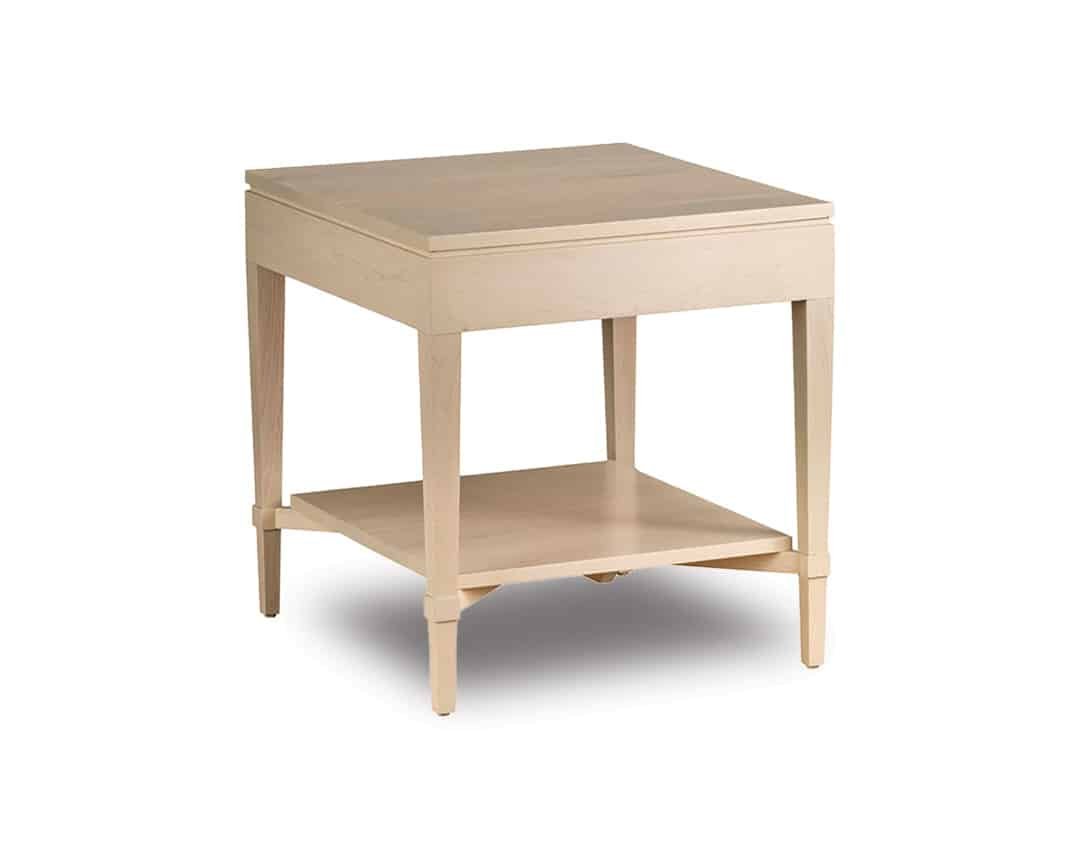
Sofas, sectionals and armchairs get most of the attention when people furnish a living room. The small tables beside them usually come last, often picked in a hurry once the big pieces are in place. Yet these are the surfaces people reach for most. They hold the coffee cup in the morning, the reading lamp at night, the remote, the phone, the book that’s halfway finished.
When a side table is the wrong height, too far away or too small, it gets noticed every day. When it fits, it just quietly does its job. Getting there takes a little planning around height, size, shape and placement.
Start With What Sits On Top
Before shopping, think about what the table needs to hold. A side table beside a reading chair may need room for a lamp, a stack of books and a mug. One next to a sofa where people watch television might only need space for a drink and a remote. In a family room, the surface may also collect chargers, tissues, coasters and the occasional snack plate.
Making a short list of everyday items helps decide the size of the top. A table that’s too small means things spill onto the floor or the sofa arm. One that’s too large crowds the seating and makes the room feel cluttered.
Get The Height Right
Height is the measurement that matters most for comfort. As a general guideline, a side table works best when its top sits close to the height of the sofa or chair arm, or a couple of inches below it. That lets you set down a glass without lifting your arm awkwardly or reaching down toward the floor.
To check, measure the arm height of your seating before you shop. If the sofa has no arms, compare the table height to the seat cushion instead, aiming for a top that’s a bit higher than the seat so it’s easy to reach while sitting back.
A table that’s much taller than the arm can feel like a wall beside the sofa. One that’s much lower forces people to lean over to reach it, which is more likely to lead to spills.
Pick A Shape That Fits The Space
Shape affects both how a table works and how the room flows.
Round tables have no corners, which makes them easier to walk past in tight spaces and safer in homes with small children. They also soften a room full of straight lines.
Square tables offer more usable surface area for their size and sit neatly against the square edges of most sofas.
Narrow tables slip into tight gaps between a sofa and a wall or between two chairs, where a standard table won’t fit.
Drink tables are small, often pedestal-style pieces made for one cup and a phone. They’re useful beside lounge chairs or in rooms with very little floor space.
Chairside tables are sized to sit beside an armchair rather than a full sofa, giving a reading nook its own surface.
Storage Or Open Space
Some side tables are simply a top and legs. Others include a drawer, a lower shelf or both.
A drawer is helpful for hiding remotes, coasters, chargers and the small items that tend to clutter a living room. A lower shelf gives space for books, magazines or a basket. In smaller homes without much other storage, these features make a real difference.
Open designs, on the other hand, look lighter and help a small room feel more spacious. If the living room already has a console or bookcase, an open table may be all that’s needed.
Choose Materials That Suit The Room
Material shapes how a table looks and how well it handles daily use. Wood tables bring warmth and suit both classic and modern rooms. Metal tables often feel lighter and more contemporary, and they work well alongside upholstered pieces. Glass tops reflect light and keep a small room from feeling heavy, though they show fingerprints and need more frequent wiping.
Mixing materials is fine and often looks more interesting than matching everything. Many living rooms pair wood end tables with a metal or glass coffee table, or use a different style beside a chair than beside the sofa. The key is to repeat a color, finish or shape somewhere else in the room so the pieces feel connected.
Placement Makes The Difference
Even the right table won’t help if it’s in the wrong spot. A few placement habits keep things practical.
Keep the table within easy arm’s reach of the seat, usually just a few inches from the sofa or chair arm.
Leave enough clearance around it so people can walk past without bumping it.
Place lamps on tables beside the seats used most for reading.
Use one table per seating spot where possible, so no one has to stretch across another person.
In a large room, tables don’t always have to match on both sides of a sofa. A slightly different style on each end can look relaxed and personal. In a smaller room, matching pairs often create a calmer, more balanced look.
Thinking Long Term
Side tables are among the easiest pieces to move from room to room, and a well-made one can serve for many years. A table that starts beside a sofa might later end up next to a bed, in an entryway or beside a chair in a home office.
That flexibility is a good reason to choose quality over the cheapest option. Solid construction, a sturdy base and a durable finish help a table stay steady and look good through daily use and the occasional move.
A Quick Shopping Checklist
Measure the arm height of each sofa and chair.
List what each table needs to hold.
Choose round, square or narrow shapes based on space.
Decide whether you need a drawer or shelf.
Pick materials that connect with the rest of the room.
Keep each table within easy reach of the seat.
Small Pieces, Daily Comfort
Small tables rarely steal the spotlight, but they shape how a living room feels to use. The right height, size and placement turn a seating area into a place where everything you need is within reach. Choosing them with a little care pays off every time someone sits down to relax.
