
Key Takeaways
- Set aside money for taxes, emergencies, and upcoming expenses before investing.
- Lump-sum investing puts money into the market at once, while dollar-cost averaging spreads purchases over time.
- Investing sooner has historically offered higher average returns, but market declines remain possible.
- Dollar-cost averaging can ease investment anxiety but does not eliminate risk.
- Choose an approach that fits your goals, time horizon, and risk tolerance.
- Check your TFSA, RRSP, or FHSA contribution limits before investing.
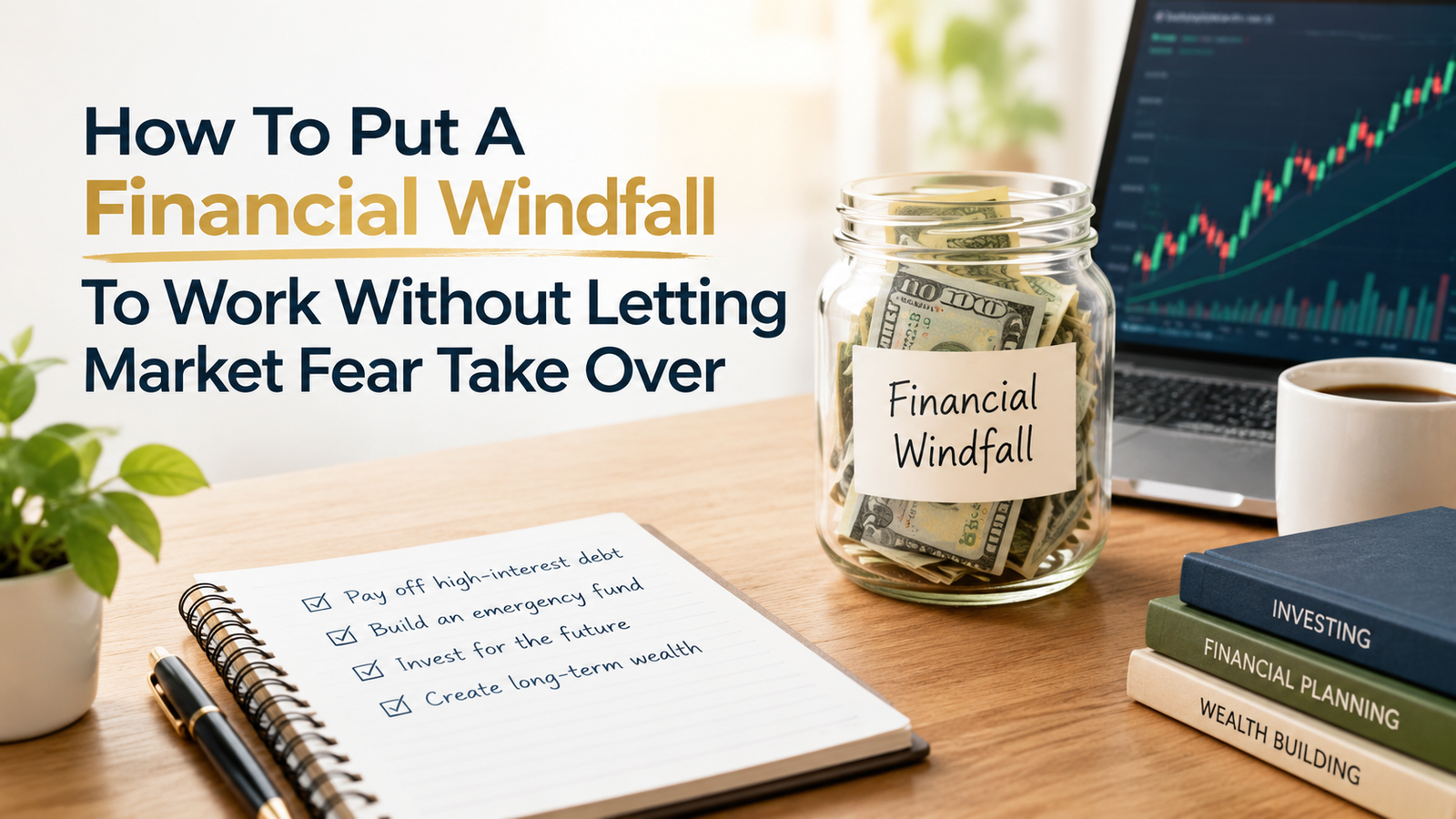
A bonus, inheritance, tax refund, severance payment, or business sale can create an exciting financial opportunity, but it can also make investing feel unusually high-stakes. The hard part is rarely finding a place to invest. It is deciding how quickly to put money to work without letting a frightening headline or a recent market drop derail a long-term plan.
For Canadians weighing lump-sum investing versus dollar-cost averaging, Questrade offers a useful overview of the two approaches for investors using Canadian self-directed accounts. As a Canadian registered investment dealer that provides self-directed investing services, Questrade explains how available cash can be invested in accounts such as TFSAs, RRSPs, and taxable accounts. The right choice still depends on your goals, timeline, tax position, and ability to remain invested when markets move.
Start With the Money’s Purpose
Before choosing an investment schedule, decide what the money needs to do. Cash for an emergency fund, a home purchase, tuition, taxes, or a major expense expected within the next few years should generally be treated differently from money intended for retirement or another distant goal.
A windfall does not automatically belong in the stock market. First, consider whether you have a stable emergency reserve and whether high-interest debt needs attention. Money that may be needed soon should prioritize liquidity and value preservation, while money with a long time horizon may be better positioned to accept market fluctuations.
Confirm How Much Cash Is Actually Available
Do not invest the headline amount until you know the net amount you can commit. An inheritance, severance payment, property sale, or business transaction can involve taxes, legal costs, debt repayment, or other obligations. Setting those amounts aside before investing can prevent an inconvenient sale later.
For example, someone receiving a C40,000windfallmightreserveC6,000 for possible taxes, C2,000foraplannedrepair,andC2,000 to strengthen emergency savings. That leaves C$30,000 that could potentially be invested for a long-term goal. The exact figures will vary, but the process matters: separate near-term needs from genuinely investable cash.
Compare Investing Immediately With Using a Set Schedule
Once the portfolio and account type are chosen, there are two broad ways to invest a windfall:
- Immediate investing: Put the full available amount into the chosen portfolio now.
- Scheduled investing: Divide the amount into equal purchases over a defined period, such as 3, 6, or 12 months.
Investing immediately gives the full amount more time in the market. Historical comparisons have often found that earlier investment produces higher average outcomes over long periods, because markets have generally risen over time. That history is not a promise, however. A market decline soon after investing can feel difficult even when the money will not be needed for many years.
Scheduled investing can reduce the emotional pressure of putting every dollar in at one moment. The trade-off is that the portion held in cash does not participate in market gains while it waits. It does not remove market risk. It simply changes when that risk is taken.
Keep Behavior in the Decision
A theoretically efficient plan is not always the best practical plan if it causes you to abandon it. If investing C$30,000 at once would make you watch the market daily and panic after a downturn, a short, rule-based schedule may be more realistic.
The key is to make the schedule specific. “I will invest when things feel safer” is not a plan. “I will invest C$5,000 on the first business day of each month for six months” is a plan. Automating those purchases, where available, can reduce the temptation to change course in response to daily market news.
Understand the Difference Between New Income and Existing Cash
Monthly investing from a paycheque is not quite the same decision as spreading out a windfall. When you invest part of each paycheque, the money becomes available over time. With a windfall, the full amount is already available, so delaying investment is an active choice about timing.
Dollar-cost averaging generally means investing a fixed amount at regular intervals regardless of market conditions. It can be a useful discipline for ongoing income. When applied to a windfall, it should be a temporary plan with a clear end date, rather than an indefinite reason to remain in cash.
Match the Approach to Your Time Horizon and Portfolio
Time horizon matters as much as timing. Someone investing for retirement decades away may have more capacity to handle short-term declines than someone saving for a down payment on a home next year. The investment mix also matters. A diversified, growth-oriented portfolio may fluctuate more than cash or short-term fixed-income holdings, regardless of whether purchases happen all at once or monthly.
Spreading purchases over time cannot make an unsuitable portfolio suitable. If a portfolio would be too volatile for your goals after a lump-sum investment, it will likely still be too volatile after a twelve-month buying schedule.
Use the Right Canadian Account for the Job
Account choice can affect taxes and implementation. A TFSA may suit money intended for flexible long-term investing, while an RRSP can be relevant for retirement savings and tax deductions. An FHSA may be appropriate for an eligible first-time home buyer, and a taxable account may be necessary once registered-account room is unavailable or unsuitable.
Before depositing a large amount, verify your available TFSA contribution room and review your RRSP deduction limit. Overcontributing can create avoidable complications, and contribution room should be verified against your own records as well as information available from the Canada Revenue Agency.
Work Through a Simple Example
Consider an investor with C$30,000 available after reserving enough for taxes and emergency savings. They have a long-term goal and have already selected a diversified portfolio. Their possible approaches could include:
- Invest the entire C$30,000 immediately.
- Invest C10,000now,theninvestC5,000 per month for four months.
- Invest C$2,500 per month for twelve months.
Each choice creates a different level of market exposure over the next year. The first approach puts all capital to work immediately. The second offers a middle ground. The third leaves more cash on the sidelines for longer. None is automatically correct, but each should be chosen deliberately rather than in reaction to market fear.
Make a Clear Plan, Then Give It Time
A financial windfall can improve long-term security, but only when it is matched to a clear purpose and a realistic investing plan. Decide how much cash must remain available, choose an account and portfolio that fit the goal, and select either immediate investing or a short, defined schedule.
Most importantly, avoid treating short-term headlines as a reason to rewrite a sound plan. The better approach is usually the one you can understand, follow, and maintain through both rising and falling markets.
