
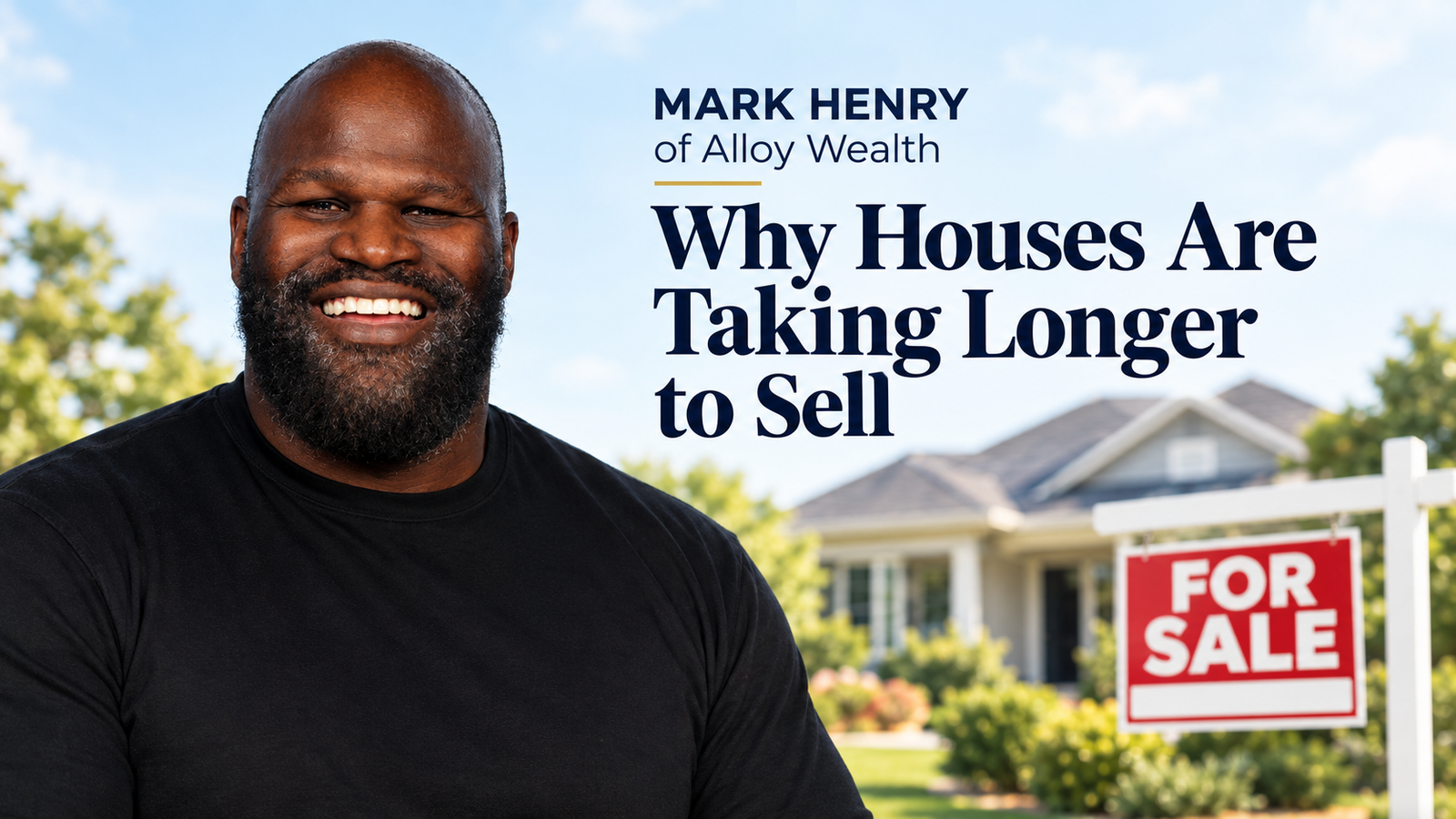
Mark Henry owns and operates Alloy Wealth, a bespoke retirement planning firm that works closely with clients with the goal of helping them to become financially prepared for the years after they finish their careers. He has been interested in finance, investment, and retirement planning since the mid-1980s, when he watched his family’s financial security collapse overnight as the stock market crash of 1987 decimated his father’s retirement. From that point on, he dedicated himself to studying and understanding the various nuances of financial planning. Mark Henry founded Alloy Wealth to help clients avoid the same overnight financial disaster that his father experienced.
Alloy Wealth’s retirement planning strategy is designed to enable clients to gain control over their budgets and begin saving as quickly as possible so that they can invest early and enjoy the benefits of long-term compound interest. Mr. Henry and his team work closely with clients, looking in detail at their personal finances, monthly spending, and potential for savings and investment. They create customized, written retirement plans for each client that take into account their current lifestyle and financial situation, assets available for investment, and retirement goals. The overarching goal of these plans is to create a retirement in which clients can enjoy a lifestyle similar to what they enjoyed during their careers, complete with a monthly or bi-weekly “salary” drawn from investments and cash reserves (similar to the paycheck they grew accustomed to while working).
In order to facilitate this financial situation, Mark Henry and the team at Alloy Wealth utilize a “three-bucket” strategy that allocates assets into long-term investments, relatively liquid short-term investments, and cash reserves (from which the clients’ “salaries” can be drawn). Depending on the clients’ investment interests and risk tolerance, the firm guides real estate investing, stocks and bonds, and even alternative assets such as crypto and precious metals.
One of the most important steps in preparing for retirement is gaining comprehensive financial knowledge, which empowers people to begin saving and investing early in their lives. The longer that investments have to mature, the more they benefit from the power of compound interest—and the sooner that a person can take control of their financial life and begin saving, the longer they will have to focus on their investments. In order to help clients—and even those who are not clients of Alloy Wealth—educate themselves on financial and investment issues, Mark Henry hosts a YouTube channel and a blog, both under the name Living Large Retirement. Through these platforms, he presents advice and educational content on a wide range of financial topics.
A recent article on the Living Large Retirement blog discussed the current real estate market and the fact that houses are currently spending a noticeably longer amount of time on the market before a sale. A unique situation has developed in which there is a large selection of houses on the market (which one would often equate with a buyer’s market), but home prices remain elevated, and interest rates have stayed high due to ongoing inflation (factors not commonly associated with a buyer’s market). As such, the financial barrier to entry for prospective homebuyers remains extremely high, despite the fact that market demand is relatively muted. This has created a sort of no man’s land in the real estate market in which houses simply aren’t selling at the level that would be expected.
To attract buyers, it is essential to optimize your online property listings and invest in professional home staging, while walking a fine line between pricing too low or discounting listings too much after a few months (as doing so could cause a house to be sold below market value, or indicate to buyers that the property has some sort of hidden problems). Rather than defaulting to reduced prices in order to prompt a sale, homeowners seeking to sell their properties should focus on ensuring that they are as attractive as possible. They can improve curb appeal by upgrading and renovating the property, hiring an experienced stager, and getting professional photographs taken for the listing. A well-presented property can command a premium price and improve the chances of a successful sale.
