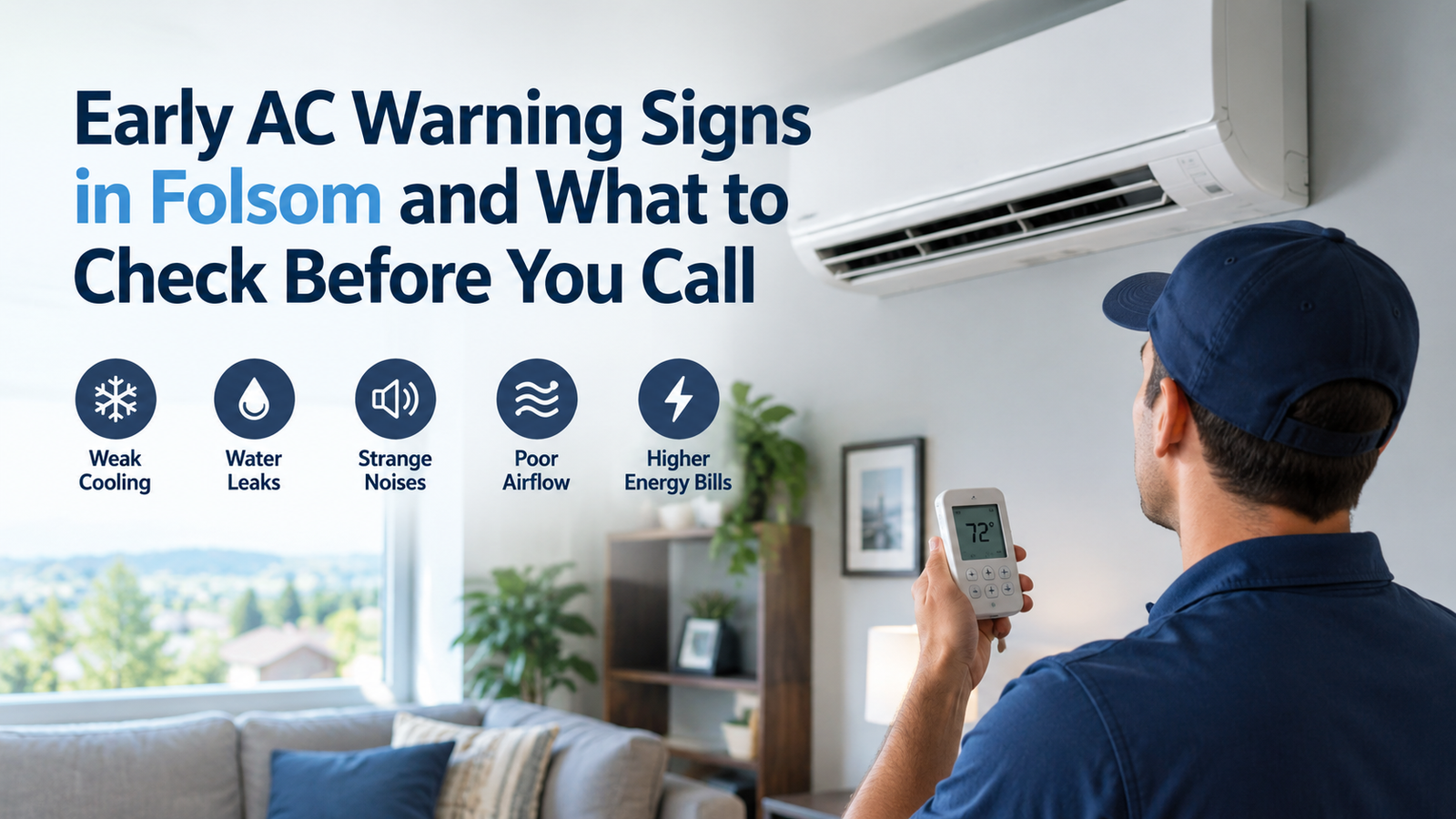
When summer heat settles over Folsom, an air conditioner works hard. Small problems that seem minor during mild weather can become serious failures when temperatures rise. Recognizing early warning signs and performing a few safe checks can help prevent compressor damage, reduce unnecessary energy use, and make it easier to describe the problem clearly to a technician. This guide explains common symptoms such as short cycling, warm supply air, unusual noises, water leaks around the air handler, and breaker trips. It also outlines what you can safely inspect, what to avoid, and when repair may give way to replacement based on age, efficiency, and the condition of major components.
- Short Cycling or Blowing Warm: Likely Causes You Can Spot
If your AC turns on and off every few minutes while rooms remain uncomfortable, start with airflow. A heavily clogged return filter can restrict airflow across the evaporator coil, causing the coil temperature to fall too low and potentially leading to ice formation.
Look for visible frost on the large insulated refrigerant line near the air handler and notice whether airflow from the supply registers feels weak or warmer than usual. If significant ice is present, turn off cooling mode and let the system thaw naturally. Do not chip or scrape the ice away.
Replace a dirty filter with the correct size and a filtration level appropriate for the system. Make sure the return grilles and supply registers aren’t blocked. A thermostat exposed to direct sunlight, kitchen heat, or another unusual temperature source can also contribute to inconsistent cycling. Persistent short cycling or warm air after you’ve corrected obvious airflow problems may point to a deeper issue. Refrigerant leaks, electrical components, controls, blower problems, or compressor faults can create overlapping symptoms.
During a heat wave, service demand can rise quickly, so arranging help early may prevent the system from becoming more stressed. For local context and scheduling information, many homeowners search for AC repair in Folsom when cycling or warm air problems appear during the first stretch of extreme summer heat.
- Buzzing, Screeching, or Rattling: Reading AC Noises
Unusual noises can offer useful clues, but they shouldn’t be treated as a complete diagnosis. A steady buzz from the outdoor condenser when the fan or compressor does not start normally may indicate an electrical or mechanical problem. A metallic screech can point to a fan motor or bearing issue, while rattling may result from loose panels, debris, or worn mechanical components.
Inside, unusual whining, scraping, or vibration from the air handler can suggest a blower or motor problem. Older systems may use components that differ from those in newer equipment, so confirm the source before replacing parts. Do not continue operating equipment that produces severe grinding, screeching, burning odors, smoke, or abnormal electrical sounds. Turn the system off and arrange professional service. Avoid opening electrical compartments or touching capacitors, contactors, fan motors, or wiring. These components can pose serious electrical hazards even when the system appears off.
- Condensate Leaks and Safety Switch Shutdowns
Water around an indoor air handler commonly points to a condensate drainage problem. Moisture removed from indoor air should flow through the drain system and away from the equipment. If the drain becomes restricted, water may collect in a secondary pan and trigger a float switch designed to stop part of the system before an overflow damages ceilings or surrounding materials.
If you notice standing water near the air handler or in an accessible secondary pan, turn the cooling system off if there is a risk of overflow. Do not bypass or hold down the float switch to force the equipment to run. Homeowners can safely note visible drainage problems and keep the area around the equipment clear. For more involved drain cleaning, follow manufacturer guidance, and have repeated clogs inspected professionally. Persistent drainage trouble may result from improper slope, a damaged drain pan, a poorly configured trap, biological buildup, or another installation issue.
- Breaker Trips, Thermostat Errors, and Safe Resets
A breaker that trips when the air conditioner starts may indicate an electrical or mechanical fault. The cause could involve wiring, a fan motor, compressor components, or another part of the system. Reset a tripped breaker only once. If it trips again, leave it off and arrange professional diagnosis rather than repeatedly restoring power.
Check simple thermostat-related items as well. Replace weak batteries if the thermostat uses them, confirm that it is set correctly, and make sure it is not influenced by direct sunlight or nearby supply air. Keep supply and return pathways open so the system doesn’t operate against unnecessary airflow resistance. Some HVAC systems use protective controls that may interrupt compressor operation when abnormal conditions occur. Repeatedly resetting the equipment without identifying the underlying cause can increase the risk of damage.
- Repair Versus Replacement: Age, Efficiency, and Major Component Condition
Not every air conditioning problem justifies replacement. Many isolated faults can be repaired when the rest of the system remains in good condition. However, replacement may be worth discussing when an older system develops major compressor problems, recurring refrigerant leaks, repeated motor failures, or several expensive repairs within a relatively short period.
Rising energy costs, persistent comfort problems, and frequent breakdowns can also factor into the decision. Efficiency ratings such as SEER2 may help compare newer equipment, but replacement should also consider duct condition, proper sizing, installation quality, and overall system performance. By contrast, a single failed electrical component, drainage problem, or other isolated issue may be a straightforward repair when the coil, compressor, and other major components remain healthy.
- Prepare for the Service Visit
Before the technician arrives, record the exact symptoms and when they occur. Note any thermostat messages or visible diagnostic codes. If ice appears on accessible refrigerant piping, photograph it before allowing the system to thaw. Write down the filter size and approximate replacement date. If the equipment labels are safely visible without removing panels, photograph the model and serial numbers.
Keep the outdoor condenser free from obvious obstructions while maintaining the clearances recommended by the manufacturer. Ensure clear access to the indoor equipment, and keep pets away from the work area. Leave the system off if you notice significant icing, water overflow, repeated breaker trips, burning odors, or severe mechanical noises. After service, keep a simple record of filter changes, maintenance visits, drainage work, and repairs. A clear service history can make future diagnosis more efficient.
Respond Early Before a Small Problem Becomes a Major Failure
Folsom’s summer heat can quickly expose weaknesses in an air conditioning system, which is why early recognition matters. Short cycling, unusual condenser noises, water around the air handler, weak airflow, and breaker trips can all signal what the system is experiencing.
Safe homeowner checks include inspecting the filter, checking thermostat settings, keeping return and supply pathways clear, and documenting visible ice, water, or unusual system behavior. Turn the system off if you see significant icing, repeated electrical trips, water overflow, burning odors, or severe noises. Avoid repeated resets and leave refrigerant work, electrical testing, and internal equipment repairs to qualified professionals. A timely diagnosis can protect expensive components, reduce unnecessary downtime, and help determine whether repair or replacement is the more practical path.