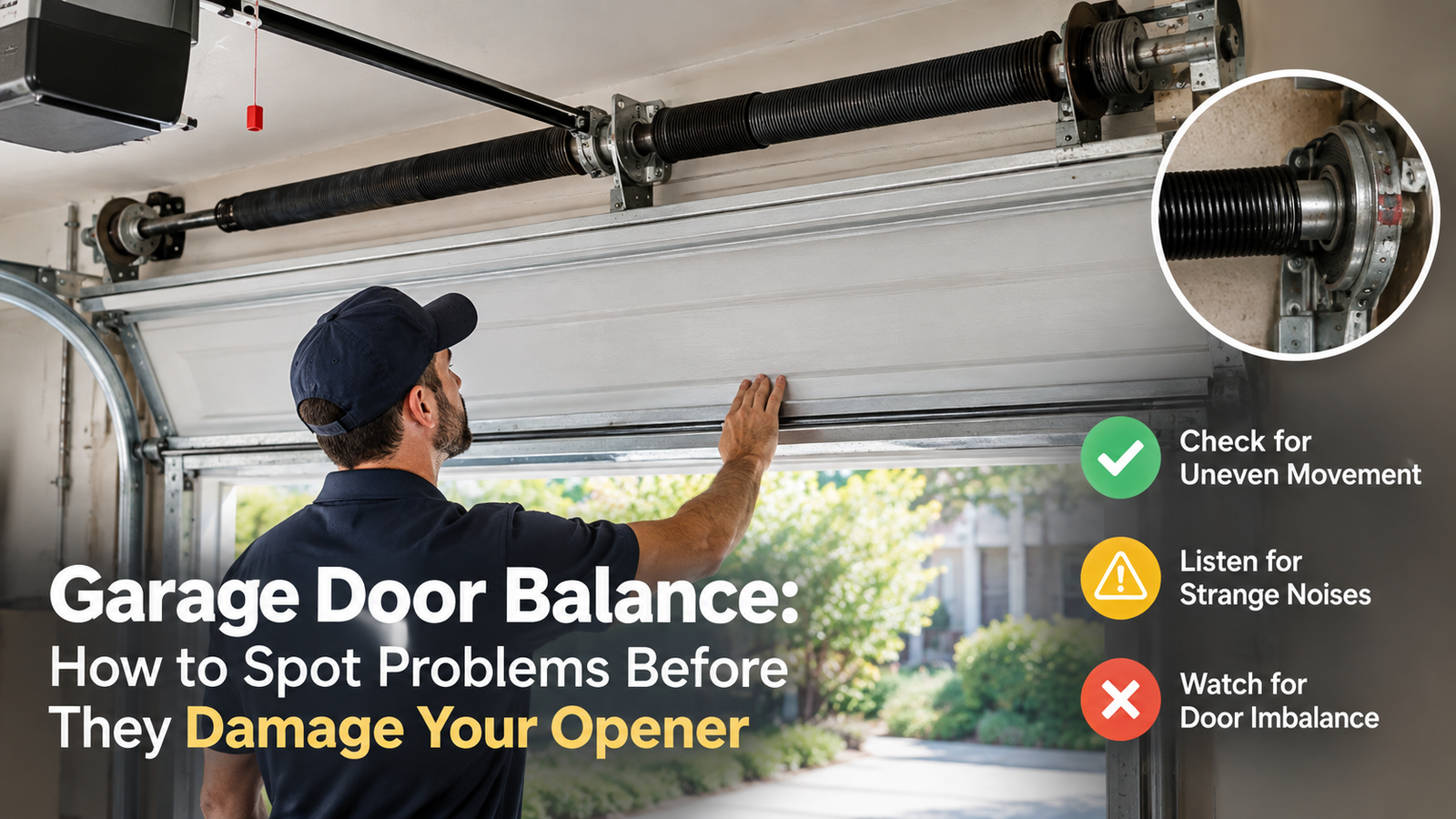
An out-of-balance garage door does more than squeak and groan. It can strain the opener’s motor, wear out the trolley and gears, and compromise safety features like auto-reverse. Because the door is the heaviest moving system in most homes, proper counterbalance from springs and cables matters on every cycle. Catching imbalance early protects panels, hinges, and rollers from accelerated wear and reduces the risk of a sudden failure that traps a car inside. Here is how to recognize imbalance, what typically causes it, a safe check you can do yourself, and when to stop and call a professional.
- Early Signs Your Door Is Out of Balance
Watch and listen during a full open-and-close cycle. A door that jerks, slows near the floor, or bounces off the header is often working against weak torsion or extension springs. Uneven daylight along the bottom seal, a cable that rides high on one drum, or rollers that pop against the track can signal a crooked lift. Another red flag is an opener that shakes the rail or chatters at the chain or belt while the door barely moves. A knowledgeable Garage door supplier can help you distinguish an opener issue from a counterbalance problem before adjustments make matters worse.
- Mechanical Causes That Throw a Door Off Balance
Most imbalance originates in the counterbalance system. Torsion springs lose torque as steel fatigues; extension springs stretch over time and no longer lift the rated weight. When set screws on the cable drums loosen, one side can slip a fraction of a turn, tilting the door and causing cables to spool unevenly. Frayed lift cables drag inside the vertical track and add resistance, especially near the bottom bracket. Worn rollers develop flat spots that bind in tight curves, and bent track or out-of-plumb flag brackets pinch the rollers. Loose hinge bolts can let panels shift under load, amplifying the tilt. The opener is designed to guide and control movement, not to haul a heavy, imbalanced door; raising the force setting only masks the cause.
- A Safe At-Home Check Using the Emergency Release
If the door is fully closed and the tracks are clear, pull the red emergency release to disconnect the opener. Lift the door by hand to about waist height and let go with your palms near the handles. A balanced door should hover or drift slowly. If it slams shut or rockets upward, the springs don’t match the door’s weight. Stop, lower it carefully, and reconnect the opener. While it is still disengaged, roll the door slowly and listen at each hinge line for grinding, and watch the lift cables for even wraps on the drums. Do not place fingers between sections, and never test balance with the door partially open.
A little care can improve how the system moves. Wipe the tracks with a dry cloth to remove grit rather than greasing them, which attracts dust and causes roller skid. Lightly lubricate steel hinges, roller bearings, and torsion spring coils with a garage door-rated silicone or white lithium spray, avoiding the photo eyes and the rubber bottom seal. In a dusty, hot garage, silicone stays cleaner; white lithium lasts longer on high-load pivots but can gather grime. Either way, more is not better, and lubricant is not a cure for a broken spring.
- When a “Quick Fix” Turns Dangerous
Some adjustments are not DIY. Torsion springs store significant energy on the shaft; releasing or adding turns requires proper winding bars and technique. Improvised tools, like screwdrivers, can slip and cause injury. Likewise, tightening cable drums with the door raised can allow a side to drop suddenly if the set screw strips. Another common mistake is turning the opener’s force or travel limits to compensate for a heavy door. Too much force can push through an obstruction before the safety reversal triggers, and misset travel can crush the top section against the header or pull out the opener arm. If you see a broken spring gap, frayed cable strands, a panel cracked at the strut, or the door sitting crooked in the opening, stop operating the system and bring in a qualified technician.
Maintenance Habits and Upgrades That Keep Balance in Check
Plan an annual balance check using the emergency release, plus a seasonal cleaning and lubrication of hinges, rollers, and springs. Keep the photo eyes aligned and the lenses clean so safety features remain effective once the opener is reconnected. When components wear, upgrades can make a noticeable difference: sealed nylon rollers reduce noise and side load chatter compared with bare steel, though steel rollers may outlast them in harsh environments. If you replace thin pan sections with insulated steel panels, expect added weight; matching the torsion or extension springs to the new door rating is essential to restore true balance. Similarly, a quiet belt drive or direct drive opener improves sound, but it cannot compensate for weak springs. Balance first, then fine-tune opener force and travel per the manufacturer’s instructions.
A well-balanced garage door moves with minimal effort, protects the opener, and keeps safety systems working as designed. By recognizing early warning signs, checking balance safely with the emergency release, and avoiding risky “fixes” that crank up force or disturb springs, you can prevent minor issues from escalating into costly failures. Thoughtful maintenance and component choices create a smoother-running system, quieter operation, and better reliability through thousands of daily cycles.




One thought on “Garage Door Balance: How to Spot Problems Before They Damage Your Opener”