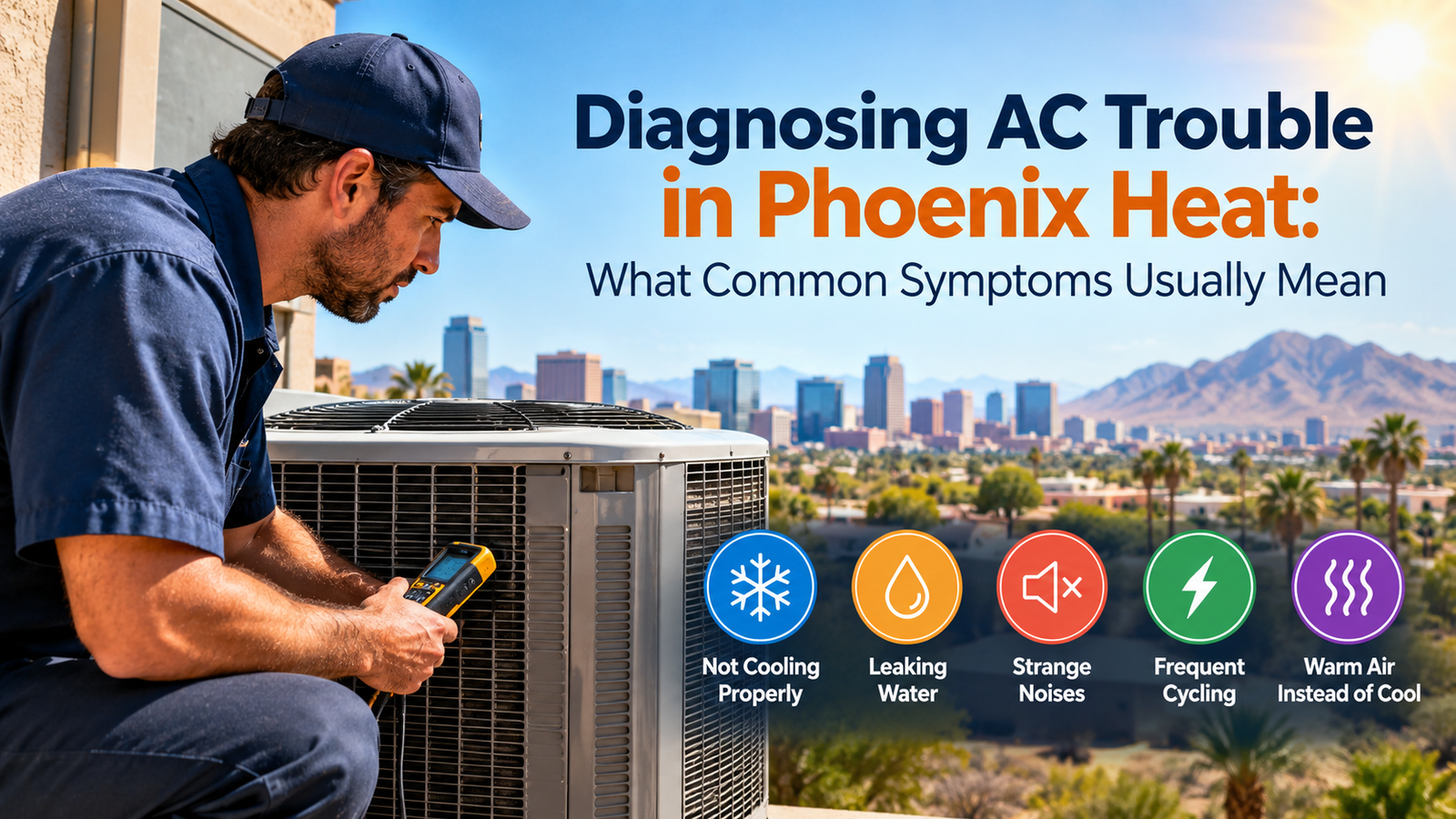
When outdoor temperatures climb past 110 degrees, an air conditioner in Phoenix can operate near the limits of its design. That extreme load changes system pressures, stresses weak electrical components, and exposes airflow problems that may not show up in milder weather. If your vents feel warm, breakers trip, or ice forms on the refrigerant line, those symptoms can point to specific problems. This article isn’t a repair manual, but it offers practical guidance on common symptoms, safe initial steps, and when to shut the system down. Understanding how condenser coils, filters, capacitors, condensate drains, and ductwork behave in desert conditions can help protect your equipment and make your service call more productive.
- High Outdoor Temperatures Change Pressures and Airflow Requirements
During extreme heat, condensing temperatures rise, and the compressor must work harder to reject heat. A dusty or clogged condenser coil increases head pressure even further, which can trip the high-pressure safety switch or cause the compressor to enter thermal overload. If the outdoor fan is running but the air leaving the top of the unit feels only slightly warm, heat rejection may be reduced because of dirty fins or debris trapped around the coil. In that situation, many homeowners search for resources such as AC repair in Phoenix after noticing that the thermostat temperature continues to rise even though the condenser is running.
Attic temperatures can exceed 140 degrees, raising return air temperature and putting extra strain on the cooling system. Restricted airflow caused by a clogged filter or damaged return duct can also push an evaporator coil toward freezing. A thermostatic expansion valve, commonly called a TXV, that begins sticking under heavy load may alternate between restricted and excessive refrigerant flow. Low refrigerant charge can also produce low suction pressure and icing on the larger insulated suction line. Heat, airflow, and refrigerant balance are closely connected, so a problem in one area often affects the others.
- Fast Clues You Can Read Without Tools
Feel the supply air coming from a central register. If it is only slightly cooler than the room while the outdoor fan is running, the system may have a dirty condenser coil or an electrical problem that prevents the compressor from operating correctly. If the supply air feels cool for a few minutes and then warms up, short cycling may be caused by an overheating compressor, restricted airflow from a clogged filter, or a contactor operating inconsistently. Ice on the suction line near the air handler, especially when combined with unusual sounds from the evaporator area, often points to restricted airflow or a refrigerant problem rather than a thermostat issue.
A breaker that trips when the condenser attempts to start may indicate a starting problem, a weakened run capacitor, or an electrical fault within the compressor. Water collecting near the indoor unit, particularly in a hallway closet or attic, often indicates a clogged condensate drain or a float switch that has shut the system down to prevent overflow. Lights that dim noticeably when the outdoor unit starts can also indicate unusually high starting current and may warrant professional inspection of the electrical components.
- Safe Checks Before You Call a Technician
Start at the return grille. Remove and inspect the filter. If it appears gray, bowed, clogged, or causes noticeable whistling, replace it. In summer, a filter with a very high MERV rating can increase static pressure if the return system isn’t designed to handle the added resistance. In some systems, a moderate MERV rating combined with more frequent filter changes may maintain better airflow. Make sure all return grilles remain open, interior doors allow an adequate return path, and furniture doesn’t block supply or return registers. If you regularly use large thermostat setbacks, consider maintaining a steadier temperature setting during extreme heat to reduce recovery demands.
At the outdoor unit, turn off the power at the disconnect before performing any basic cleaning. Remove vegetation and debris within about 24 inches of the condenser, then gently rinse the coil with a garden hose. Avoid excessive water pressure, as it can bend the fins and restrict airflow. Also check the insulation around the larger refrigerant line. Deteriorated insulation from prolonged sun exposure can increase heat gain and reduce system efficiency. Do not remove electrical panels, handle internal components, or connect refrigerant gauges. A qualified technician should perform those tasks.
- Monsoon Dust, Sun, and Roofing Work: Seasonal Stressors to Expect
After a dust storm, fine particles can collect deep inside condenser fins, reducing the unit’s ability to release heat. Cooling capacity may decline, head pressure can rise, and protective devices may activate during the next period of extreme heat. For example, an air conditioner may cool adequately at night after a major dust storm but struggle during the afternoon. If the condenser also feels unusually hot, restricted heat transfer through a dirty coil may be contributing to the problem rather than a faulty thermostat.
Nearby roofing or stucco work can also create problems. Construction dust, small debris, or material washed into the condenser by sprinklers can cover the coil quickly. Constant exposure to intense sunlight can degrade refrigerant line insulation and add thermal stress to equipment during the afternoon. Providing shade may reduce direct solar exposure, but screens or structures placed too close to the condenser can restrict airflow and create more problems than they solve. Maintain manufacturer-recommended clearances and allow warm discharge air to escape freely from the top of the unit. Summer storms can also cause electrical surges. If a condenser begins humming but the fan does not start after a storm, an electrical component such as the capacitor may require inspection.
When to Power Down and Call and How to Stay Cool Meanwhile
Turn the cooling system off at the thermostat if you see heavy ice on the refrigerant line or evaporator area, if the breaker trips repeatedly during startup, or if you notice a strong electrical burning smell near the air handler or condenser. Continuing to operate a frozen or electrically compromised system can increase the risk of equipment damage. If the coil is frozen, turning off cooling while letting the indoor fan run may help the ice thaw. Once the system has thawed, avoid repeatedly restarting it if the original problem remains. If water stains appear on the ceiling beneath an attic air handler, shut the system down to reduce the risk of additional water damage until the condensate drain and safety controls can be inspected.
While waiting for service, close blinds or curtains on windows exposed to intense afternoon sunlight and use ceiling fans to improve air movement. Limit activities that add significant heat or moisture indoors, such as prolonged cooking. Portable evaporative coolers can provide some relief when outdoor air is very dry, although their effectiveness decreases when monsoon humidity rises. If indoor temperatures become dangerously high, move to the coolest available part of the home, drink water regularly, and watch for signs of heat-related illness. Avoid forcing a malfunctioning air conditioner to keep running, because it can turn a small problem into a more expensive failure.
Desert heat exposes weaknesses that may remain hidden during milder seasons. By watching for symptoms such as frequent cycling, warm supply air, tripped breakers, unusual noises, water leaks, or ice on the refrigerant line, you can tell when a cooling system needs attention. Basic checks involving the filter, condenser surroundings, thermostat settings, and visible condensate drainage can provide useful information without interfering with sensitive components. Phoenix heat places significant demands on air conditioning equipment, but timely maintenance and accurate diagnosis can help compressors, capacitors, coils, and airflow components continue operating when reliable cooling matters most.