The Benefit Most Investors Forget About
Ask someone why they invest in mutual funds, and you’ll usually hear two answers, growth and income. There’s a third benefit that quietly sits underused by a lot of investors, one tied directly to tax savings. It’s not a hidden feature exactly, it’s just something people don’t think to actually leverage until tax season rolls around and they’re scrambling for last minute deductions.
What Makes This Category Different
ELSS mutual funds work like regular equity funds in one important sense, they invest heavily in shares across sectors and company sizes, spreading risk so a weak performer in one area gets balanced out by strength elsewhere. What genuinely sets them apart is the tax angle layered on top.
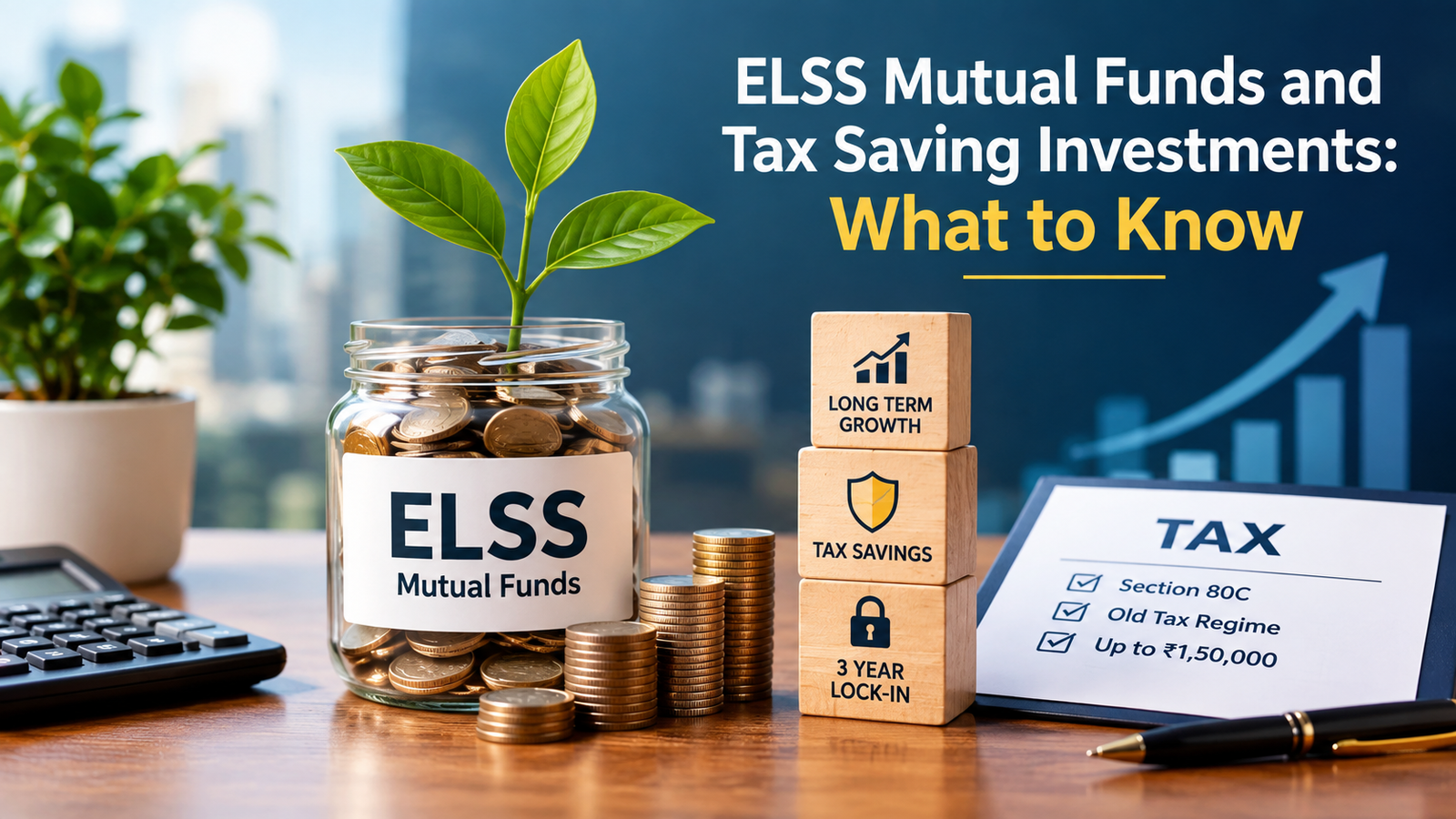
Two specific rules define this category. First, a mandatory three year lock in, meaning your money stays put and can’t be redeemed early no matter what. Second, at least 80 percent of the fund’s assets must sit in equities, keeping the growth potential intact even with the tax benefit attached.
Where the Actual Tax Savings Come From
Investors may deduct up to 1,50,000 under Section 80C of the Income Tax Act. Worth ₹ being precise here though, this benefit only applies under the old tax regime, not the newer one.
And if you’re already maxing out that same 1,50,000 limit through other instruments, PPF, life insurance premiums, or similar options, an ELSS investment won’t add any further tax benefit on top of what you’ve already claimed elsewhere.
Weighing Higher Returns Against Real Volatility
Since these funds lean heavily into equities, they carry genuine potential for stronger returns compared to more traditional tax saving options like fixed deposits or National Savings Certificates.
That upside comes paired with real risk though, equity markets move, sometimes sharply, and ELSS returns are never guaranteed the way a fixed deposit’s interest rate is.
Anyone drawn purely to the tax benefit should understand this trade off clearly before committing, since the same market exposure that offers higher growth potential also means accepting genuine ups and downs along the way.
Why the Lock In Isn’t Entirely a Downside
Three years without access to your money sounds restrictive, and in a genuine emergency, it can be. But there’s an upside hiding in that restriction too, it removes the temptation to panic sell during a rough market stretch, forcing a kind of patience that often works in an investor’s favor by the time the lock in period actually ends.
Choosing a Fund House With Real Track Record
Once the ELSS decision feels right, picking where to actually invest matters just as much.
Managing this through SBI mutual fund online platforms gives investors access to established schemes with a genuine, long standing track record in the Indian market, alongside the straightforward digital tools needed to track performance and manage contributions without unnecessary friction.
Deciding If This Fits Your Own Plan
ELSS funds make a genuinely strong case for anyone under the old tax regime looking to combine tax savings with real equity growth potential.
The catch is honesty about your own risk tolerance and whether you’re comfortable locking money away for three full years. For investors who can accept that trade off, and who haven’t already exhausted their Section 80C limit elsewhere, this category remains one of the more compelling options for building long term wealth while trimming a tax bill at the same time.