
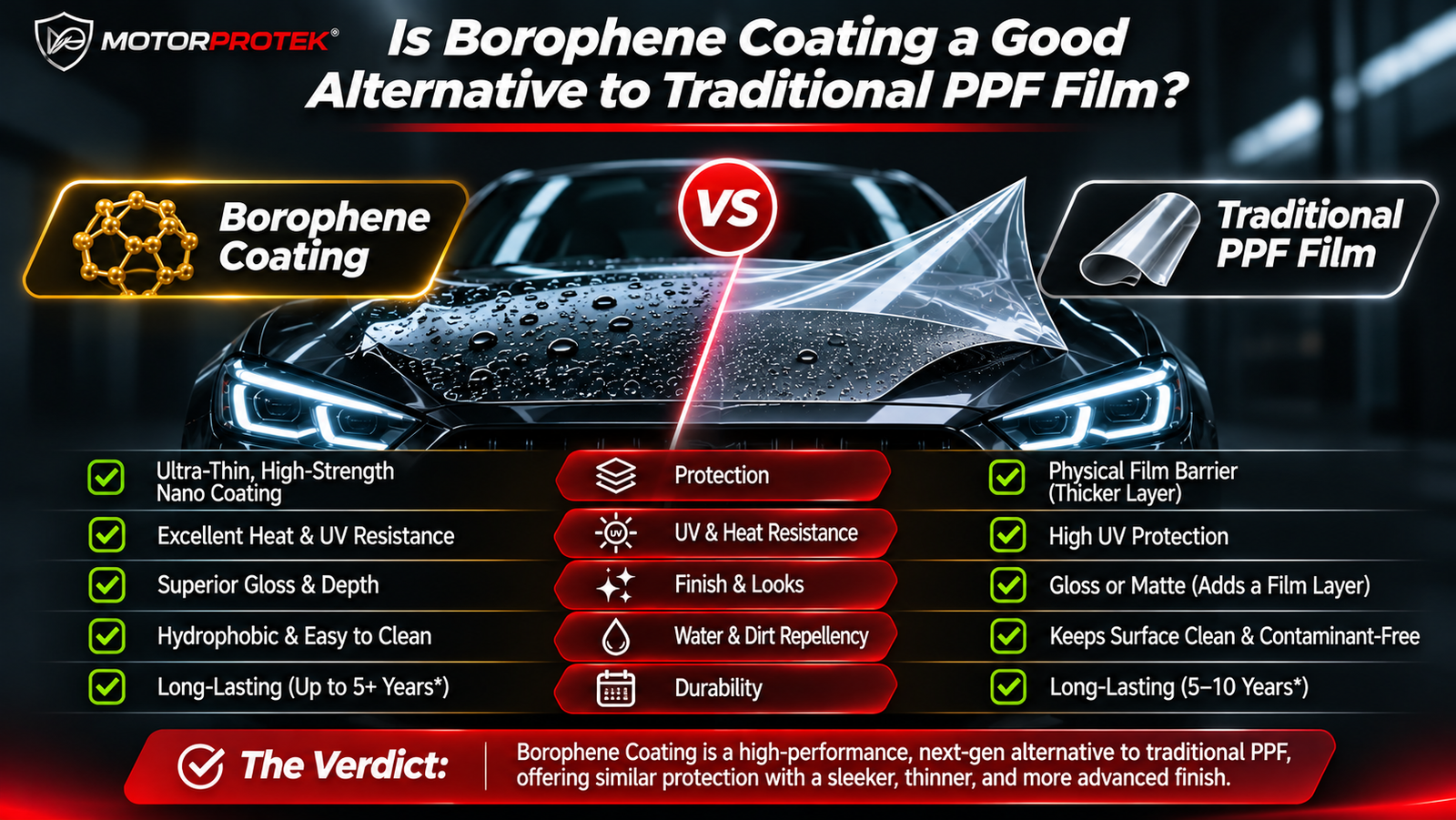
Car owners who want their cars to look good past the first few years have a priority of maintaining the paintwork. Everyday driving presents its own set of challenges, from flying stones and road debris to bird droppings, dust, and harsh sunlight. For many years, traditional paint protection film has been the popular choice to protect painted surfaces, but newer coating products have also been attracting attention. One of the names that is coming up in automotive detailing is borophene coating.
But can the borophene coating really replace the traditional PPF film? The answer will depend on the type of protection you need, the actual formulation of the product, and how you use your vehicle. Knowing the differences can help you make wise use of your money.
Borophene coating?
Borophene, a two-dimensional boron atom material, has drawn scientific interest due to its unique properties. In automotive detailing, “borophene coating” may refer to a commercially marketed coating formulation rather than borophene itself.
This distinction is important because products with the same name may have different ingredients or performance. Formulation, surface preparation, application, and test data determine their efficacy.
How does the conventional PPF film work?
Traditional paint protection film (PPF) is a flexible film that covers the painted panels of vehicles. Thermoplastic polyurethane, or TPU, is used in a lot of modern products. This material is abrasion resistant and will take small impacts.
Unlike liquid coatings, PPF protects the paint physically from external hazards. It helps to minimize damage from stone chips, light scratches, and road debris.
Some high-end films have self-healing topcoats, which hide minor surface marks when they are warmed up. PPF can be applied on the hood, front bumper, side mirrors, front fenders, or the entire vehicle.
Borophene Coating vs PPF Film: What’s the Difference?
1. Protection from Physical Damage
That’s the biggest difference between the two options. A coating is simply a change to the surface, while PPF is a protective layer that can withstand some small impacts.
For highway or loose gravel drivers, PPF is usually the better option to reduce the risk of stone chips. A liquid coating is not intended as a replacement for impact-resistant film.
2. Water Repellency & Washability
Borophene-branded coatings could be engineered to enhance water behavior and facilitate routine washing. When a product functions as expected, water and certain impurities may be removed more readily from the treated surface.
Depending on its topcoat, PPF can also offer water-repellent properties. Some owners choose to apply a compatible coating to the film to get the physical protection and the ease of cleaning in one go. Always check products are compatible for use together before mixing treatments.
3. Look and Finish
Coatings can improve the look of a well-prepared paint job, often giving a smooth, polished finish. PPF comes in different finishes such as clear gloss and matte, which gives owners more flexibility in terms of maintaining the vehicle’s appearance or changing it.
Neither will fix deep scratches or chipped paint without proper preparation. To achieve the best results, inspect the surface before applying any protective product.
4. Cost and Time Value
Total cost varies by product, vehicle size, area to be covered, installation needs, and anticipated service life. A coating might cost less upfront, but often PPF is a larger investment, especially for full-body protection.
Think about the damage you want to avoid, rather than price comparison. If easier maintenance is your goal, it may make sense to spend less on a coating. If paint chips are the biggest concern, the extra cost of PPF might have more practical value.
How to Select the Best Protection for Your Car
Begin with your driving habits and your expectations. If you spend most of your time driving your car in the city and want an easier way to keep it clean, a good coating might be the way to go. If you often drive long distances or want to safeguard easily damaged painted panels from road debris, PPF is usually the stronger option.
If you are looking for the best PPF brand in India, don’t just go by the advertising claims. Check the film material, technical specifications, warranty conditions, installer experience, and after-sales support options. Request a written quote detailing which panels are included and any additional preparation charges.
Can I use both products at the same time?
In many circumstances, a compatible coating can be applied over PPF to help with water repellency and routine cleaning. The film provides physical protection, and the coating provides the surface-maintenance benefits.
But not all coatings are compatible with all films. Always follow the recommendations of the product manufacturers and seek the advice of a professional before mixing products.
Conclusion
Borophene coating might be worth considering for car owners who prioritize surface appearance and easier maintenance, provided the product’s claims are supported by credible information. But if the main goal is resistance to stone chips and other minor physical impacts, it is not a direct replacement for paint protection film.
It really depends on what you prioritize, your budget, and where you drive. To achieve the best results, compare verified product specifications, select an experienced installer, and properly maintain the treated surface.
