
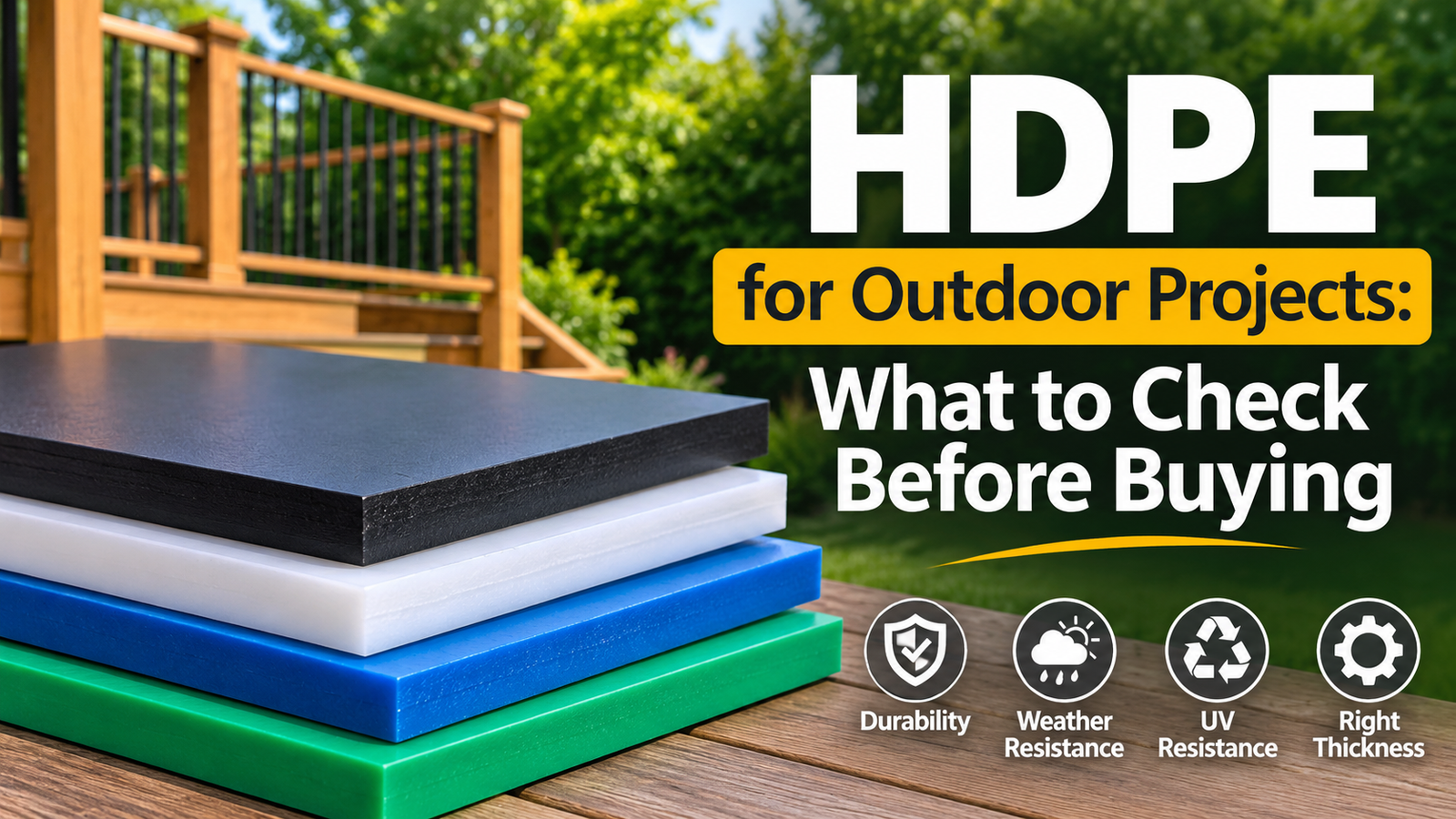
HDPE, or high-density polyethylene, can suit outdoor panels, protective liners and fabricated components when the correct grade is selected. Its low moisture absorption is useful in wet environments, but sunlight, temperature and loading also affect performance. For Australian buyers, confirming material specifications and installation requirements before ordering helps prevent unsuitable choices and avoidable rework.
Key Takeaways
- Confirm that the grade is recommended for outdoor exposure.
- Request documentation of UV stabilisation.
- Select thickness alongside panel dimensions, loads and supports.
- Allow for thermal movement when designing fixings.
- Confirm joining methods and chemical compatibility before fabrication.
Confirm the Grade’s Outdoor Suitability
Check UV Stabilisation
Do not assume every polyethylene sheet will withstand prolonged sunlight exposure. Request product information confirming that the selected grade is UV-stabilised and suitable for the intended use.
Colour alone does not establish weathering performance. Even where black grades are formulated for outdoor service, confirm the exact product specification rather than relying on appearance.
Describe the Exposure Conditions
Tell the supplier whether the component will face full sun, shade, standing water or chemical contact. Explain its intended function and expected service conditions.
A sheltered equipment cover and an exposed agricultural panel may need different specifications, despite belonging to the same material family.
Choose HDPE Around Loads and Support
When comparing HDPE options, provide panel dimensions, loading and fixing details. Thickness affects rigidity, but the complete support arrangement determines how the component behaves in service.
Account for Sustained Loading
Polyethylene can gradually deform under sustained loads, a behaviour known as creep. Higher temperatures can increase this deformation.
Large unsupported panels may therefore need additional supports. Request guidance based on the actual span, load and service temperature instead of choosing thickness using a general rule.
Assess Surface Temperatures
Sunlit components can become hotter than the surrounding air. Check the manufacturer’s temperature guidance against likely operating conditions.
A published temperature limit alone does not establish load-bearing suitability. Consider temperature together with loading, exposure duration and the grade’s technical data.
Plan Expansion and Joining Details
HDPE expands and contracts as temperatures change. Follow manufacturer guidance for fixing clearances and movement allowances. Restricting that movement can contribute to distortion or stress around fasteners.
Confirm the joining method before fabrication. Standard adhesives often bond poorly to polyethylene. Mechanical fastening, compatible welding or a specialist bonding system may be appropriate, depending on the design and service conditions.
Prepare a Complete Order Specification
State the grade, thickness, dimensions, quantity and colour. Include drawings for holes, cut-outs and shaped parts, then confirm tolerances and available fabrication services.
For chemical exposure, identify the substance, concentration, temperature and contact duration. Confirm stock, processing times and delivery charges before placing the order.
Summary
Outdoor performance depends on material grade, support and installation. Confirm UV suitability, loading and thermal movement requirements before purchasing. Explore available materials through Shop Plastic Sheets and discuss your project specification before making a final selection
