
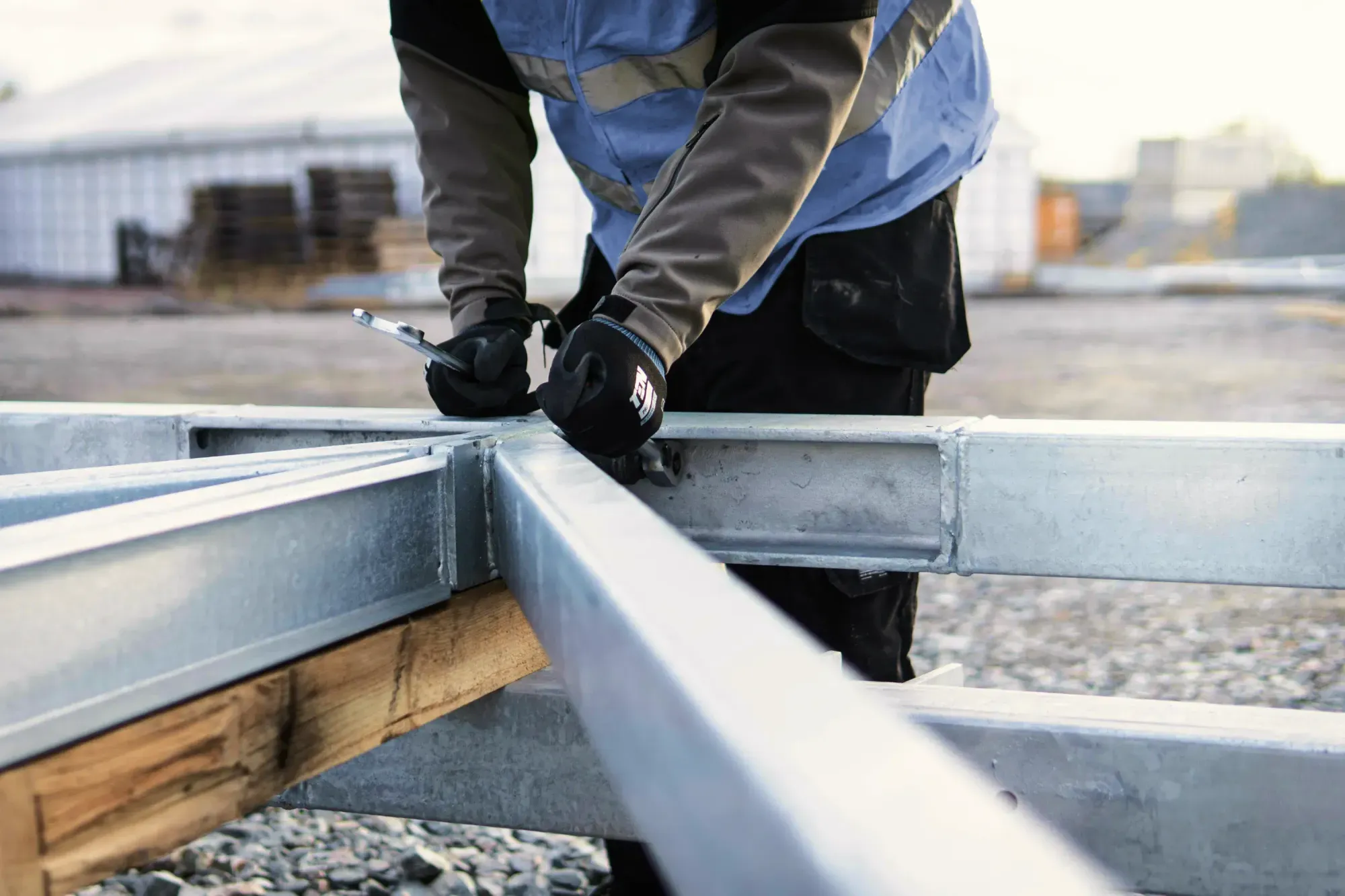
Hospitals, courthouses, control rooms, and public counters increasingly face two overlapping requirements: resist armed attack and contain fire long enough for safe evacuation. Meeting both objectives in one partition is not as simple as layering hard materials until it feels substantial. Ballistic resistance and fire endurance are governed by different test methods, require different joint and penetration details, and can pull material choices in opposite directions. This article explains how to translate threat and code requirements into a buildable specification, where conflicts often appear, and which details preserve performance in the field. The goal is a barrier that defeats realistic firearm threats while maintaining a listed hourly fire resistance rating across seams, openings, and mechanical electrical pass-throughs.
- Translating Ratings: Ballistic Standards Versus Fire Tests
Ballistic ratings such as UL 752 and NIJ Standard 0108.01 classify how assemblies stop rounds of specific caliber, mass, and velocity. Those listings say nothing about performance in sustained fire. Fire resistance ratings, typically demonstrated under ASTM E119, measure how a wall or partition limits temperature rise and collapse during a timed furnace exposure, sometimes followed by a hose stream test. Life safety codes reference the hourly result, not the wall’s mass or thickness. UL 1479 or ASTM E814 separately evaluates through-penetrations, and UL 2079 covers fire-resistive joint systems. A common mistake is specifying a “Level 3 ballistic wall” in a 1-hour corridor and assuming both needs are met. They are not equivalent. A proper spec identifies the required ballistic level for the credible threat and the code path’s listed hourly fire-resistance rating, then requires tested, compatible details for every opening.
- How Materials Behave Under Heat and Impact
Ballistic fiberglass panels, hardened steel plate, filled CMU, laminated glass, and ceramic-faced glazing each absorb and spread impact energy differently. Under fire, they behave differently: resins in many fiberglass laminates can char or release gases; steel conducts heat rapidly and can lose strength; and interlayers in glazing can delaminate. For walls that must do both jobs, treat the system as a composite. Opaque partitions often pair a ballistic core with fire-rated gypsum sheathing, mineral wool insulation to slow heat transfer, and intumescent sealants at perimeters. When you specify ballistic fire barriers, require that the combined assembly maintains the hourly rating while the ballistic core remains continuous around window frames, service chases, and latch side hardware. Do not assume a product catalog note such as “meets Level 3” covers fire exposure, or that a 2-hour listing covers handgun threats. Each claim needs its own evidence.
- Achieving Continuity at Seams, Penetrations, and Corners
Real projects fail at the fasteners, not the panels. For fire performance, select listed joint systems under UL 2079 that match your hourly rating, joint width, and movement class. Specify through-penetration systems under UL 1479 or ASTM E814 for each conduit bundle, cable tray, and pipe size. Mineral wool backing and intumescent sealants are common, but details vary by substrate and hourly rating. For ballistic continuity, avoid aligned seams. Stagger panels so no straight-line path exists; back up vertical joints with steel channels or overlap plates; and use steel angles at inside corners to prevent round deflection into adjacent rooms. Where ducts pass through, a fire damper listed under UL 555 may satisfy the fire requirement, but the damper sleeve and grille can create a ballistic weak point unless they are protected by a continuous plate or relocated outside the threat sector.
Window and counter openings deserve the same rigor. A transaction window should integrate a listed fire-resistive glazing system where code requires it and a ballistic rating that matches the opaque wall. Frames, mullions, and pass-through devices must be part of the tested assemblies. An otherwise well-engineered partition can be compromised by a field-built jamb, a nonrated speaking port, or a mail slot cut through after the fact. Detail submittals should show overlaps, shingled seams on the threat side, and the gauge and spacing of mechanical fasteners that do not become heat bridges across the fire-rated layers.
- Balancing Visibility, Weight, and Upkeep
Glazing supports visibility and service, but the terms “fire protective” and “fire resistive” are not interchangeable. Fire-protective products like wired glass or certain ceramics can limit flame spread in smaller openings; fire-resistive systems are tested to ASTM E119 and act as transparent walls for longer durations. Adding a ballistic rating increases thickness and weight, which affects anchorage, deflection limits, and door closers. Opaque barriers are lighter for the same ballistic level and often easier to detail around utilities, but they remove line of sight. Plan for maintenance: any projectile impact warrants inspection and likely replacement of the affected panel or lite, even if penetration did not occur. After a fire event, replace activated intumescent seals and check any exposed ballistic core for heat damage or delamination before putting the space back into service.
Two Scenarios and How the Specs Change
Emergency department registration often needs staff visibility, handgun-threat resistance, and a 1-hour separation from adjacent corridors. A practical approach is a hybrid: a 1-hour listed gypsum-and-stud assembly with a continuous ballistic fiberglass core on the threat side; a factory-built transaction window that is both appropriately handgun-rated under UL 752 and fire-resistive for the required opening duration; and listed joint and penetration systems matched to the partition’s rating. The detail shows overlaps at mullions, shingled seams around the frame, and protected conduit runs that do not interrupt the ballistic layer.
A public safety communications room next to electrical service equipment may require a 2-hour separation and a higher threat assessment for long approach corridors. Heavier cores or steel plate introduce new constraints: increased dead load on anchors, thermal bridging that challenges the 2-hour design, and more complex coordination with cable trays. You might relocate large penetrations outside the protected envelope, use floor-mounted cable vaults that stub up inside the room, and route supply air so fire dampers and access panels don’t interrupt the ballistic side. In both cases, shop drawings that resolve overlaps, corner protection, and tested firestopping systems are as important as the product cut sheets.
Combining ballistic and fire performance requires disciplined detailing. Start by identifying the credible ballistic threat and the code-required hourly rating, each with the correct test standard. Choose materials that complement, rather than fight, one another under heat and impact, and preserve continuity across joints, openings, and penetrations with listed systems. Validate anchorage, weight, and movement so the assembly behaves as intended over time. When the drawings capture those specifics, and the submittals prove the listings, a single wall can do both jobs without surprises during inspection or, more importantly, during an emergency.
