
Introduction
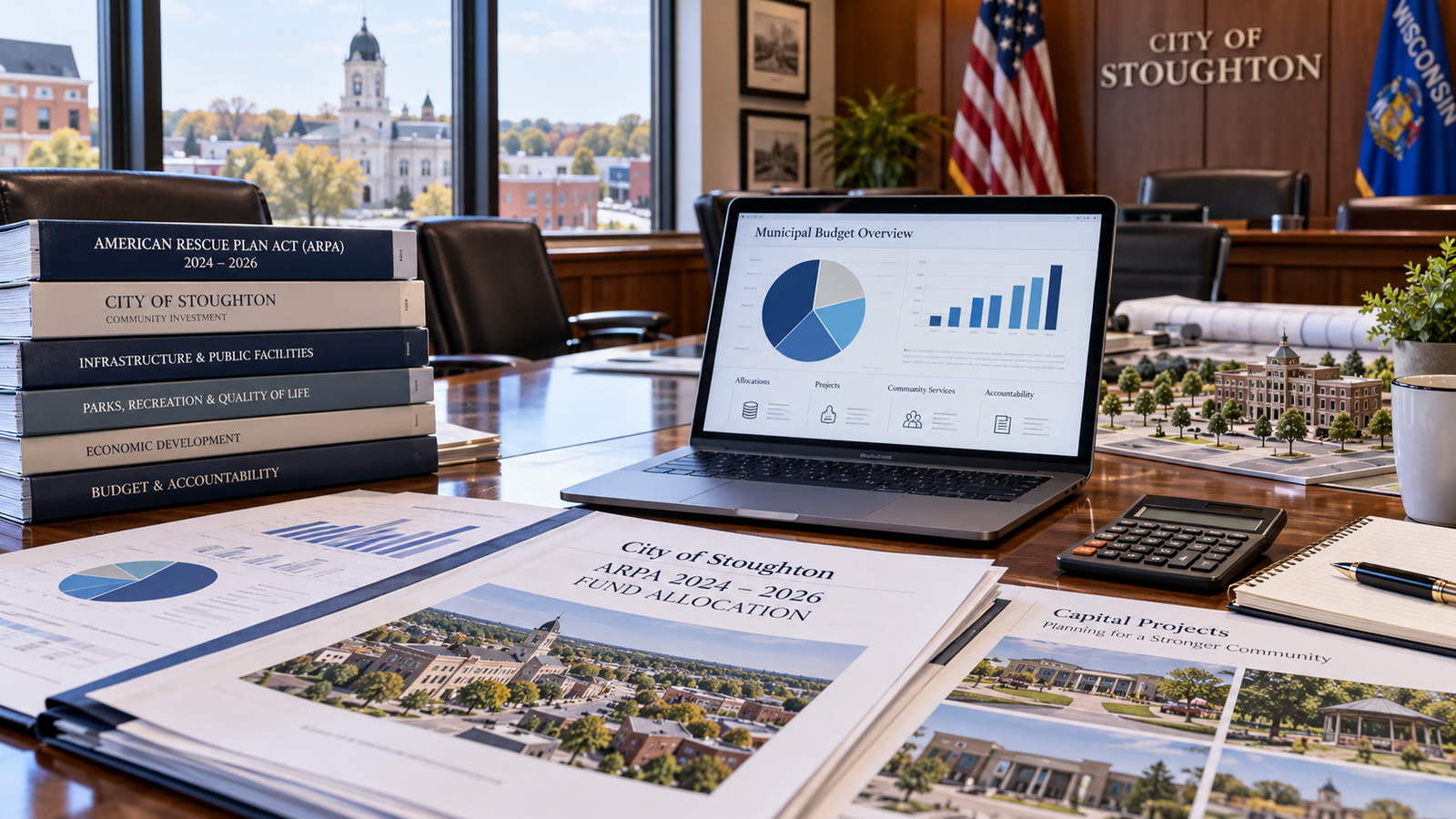
The city of stoughton arpa 2024-2026 fund allocation is an important topic for understanding how a municipality manages federal recovery funding, adjusts annual budgets, and tracks public expenditures over several financial years. In Stoughton, Wisconsin, the subject connects the American Rescue Plan Act (ARPA) with municipal financial planning, capital improvements, public services, and the administrative responsibilities associated with government grants.
The American Rescue Plan Act of 2021 was enacted to help the United States respond to the economic and public-service challenges associated with the COVID-19 pandemic. Through its State and Local Fiscal Recovery Funds program, the federal government provided resources to eligible state, county, and municipal governments. These funds were intended to support recovery, address certain pandemic-related impacts, and strengthen local fiscal capacity within established program rules.
For Stoughton, understanding the 2024–2026 period requires more than identifying an original grant award. It requires examining how previously received funds were budgeted, whether projects continued across financial years, how amendments affected authorized spending, and how the city documented the final use of its resources.
The city maintains a public collection of budget documents covering 2024, 2025, and 2026. Its published budget-amendment records include a 2025 resolution titled R-39-2025, concerning the 2025 adopted budget and ARPA carryforward, and a 2026 resolution titled R-59-2026, concerning ARPA carryforwards. These records establish that ARPA-related budget adjustments continued into the period under examination. The existence of a carryforward resolution, however, does not by itself establish the exact amount spent, the completion status of every project, or the balance remaining in the fund.
The city of stoughton arpa 2024-2026 fund allocation should therefore be understood as a financial-management subject involving funding authorization, project implementation, reporting, and expenditure verification. Each stage answers a different question: how much funding was available, which activities were authorized, how much was actually spent, and what public benefit resulted.
This article explains the federal program, the municipal budgeting framework, the significance of carryforward resolutions, the methods used to evaluate project spending, and the questions residents and researchers should ask when reviewing public financial records. It distinguishes established information from details that require confirmation in the underlying budget schedules or expenditure reports.
Biography Table: Key Facts About the Allocation
Although the word biography is commonly associated with a person, a structured information table is useful for presenting the essential facts about a municipal funding program.
| Category | Details |
|---|---|
| Subject | City of Stoughton ARPA 2024–2026 fund allocation |
| Municipality | City of Stoughton |
| State | Wisconsin, United States |
| Funding program | American Rescue Plan Act |
| Relevant federal program | State and Local Fiscal Recovery Funds, where applicable |
| Original federal legislation | American Rescue Plan Act of 2021 |
| Primary administrative subject | Municipal budgeting, grants, and public expenditures |
| Period examined | 2024, 2025, and 2026 |
| Municipal budget records | 2024 budget documents and 2025–2026 budget records |
| Documented 2025 ARPA record | R-39-2025, budget amendment for ARPA carryforward |
| Documented 2026 ARPA record | R-59-2026, budget amendment for ARPA carryforwards |
| Municipal financial oversight | City Finance and Accounting Department, Common Council, and applicable audit processes |
| Public accountability mechanism | Budgets, resolutions, financial statements, and expenditure records |
| Original allocation amount | Requires verification against the applicable official award record |
| Total approved project allocation | Requires review of the relevant project-level schedules |
| Actual expenditure through 2026 | Requires reconciliation with accounting records and final reports |
| Final remaining balance | Requires confirmation from the closing financial records |
| Main research objective | Establish how funds were authorized, carried forward, spent, and reported |
The table intentionally separates documented administrative facts from financial figures that need to be confirmed. A responsible article should not supply a precise total simply because a funding program existed or because a budget amendment refers to a carryforward.
What Is the American Rescue Plan Act?
The American Rescue Plan Act, commonly abbreviated as ARPA, was enacted by the United States Congress in March 2021. It formed part of the federal response to the public-health and economic consequences of the COVID-19 pandemic.
The legislation included several forms of assistance. These addressed areas such as households, businesses, public health, education, transportation, and state and local government finances. One important component was the State and Local Fiscal Recovery Funds program, which supplied financial resources to eligible governments.
Municipalities faced different challenges during the pandemic. Some experienced reduced revenues, increased demand for public assistance, higher costs for emergency services, or interruptions to planned infrastructure work. Others needed to adapt public facilities, maintain essential operations, or respond to new community needs.
Recovery funding was designed to give eligible governments resources to address qualifying needs while following federal rules. The program was not simply an unrestricted source of money for every municipal expense. Allowable uses depended on the applicable program requirements, including eligibility rules, documentation, reporting, and deadlines.
The city of stoughton arpa 2024-2026 fund allocation must be considered within this wider federal framework. A local budget decision can be understood properly only when the funding source and its restrictions are known.
The Difference Between ARPA and Other Public Funding
Municipal budgets frequently combine several types of revenue. These may include property taxes, service charges, state aid, borrowing, grants, utility revenue, and transfers between municipal funds.
ARPA funding is different from ordinary recurring revenue because it originates from a specific federal recovery program. It is subject to grant-related requirements and does not automatically become a permanent annual source of municipal income.
This distinction matters when a city decides how to pay for a project. A one-time grant may be appropriate for a qualifying capital purchase or another eligible activity, but a project that creates continuing staffing, maintenance, or operating costs may require a separate long-term funding plan.
For example, purchasing equipment with a temporary grant does not necessarily mean the city can use the same grant to pay for every future repair or replacement. The eligibility of later expenses must be evaluated under the applicable funding rules.
Understanding these distinctions helps prevent confusion between a project’s overall cost and the amount paid from ARPA resources.
Why the 2024–2026 Period Matters
The years 2024, 2025, and 2026 are significant because they fall within the later stages of the federal recovery-funding program and the period when municipalities had to manage remaining commitments, complete eligible work, and maintain appropriate records.
For many local governments, the challenge during these years was no longer limited to deciding what projects should receive funding. Officials also needed to determine whether previously authorized projects were ready for implementation, whether procurement had progressed, whether actual costs differed from estimates, and whether the remaining work could be completed within the applicable deadlines.
The city of stoughton arpa 2024-2026 fund allocation is therefore best examined as a sequence of budget decisions rather than a single announcement.
2024: Budget Planning and Financial Position
The 2024 budget provides a starting point for understanding the city’s financial position during the period. It can help researchers identify the structure of the adopted budget, the capital improvement program, and the municipal priorities that informed spending decisions.
A budget is an authorization and planning document. It identifies expected revenues and approved expenditures, but it does not prove that every planned amount was ultimately spent.
To understand ARPA activity in 2024, a researcher should compare the adopted budget with the relevant amendments, grant-account records, and year-end financial statements. This comparison can reveal whether allocations changed, projects were delayed, or unspent amounts remained available for authorized future work.
It is also important to distinguish the city’s regular capital budget from its ARPA-funded activities. A capital improvement may be supported by several funding sources, and a project appearing in a capital plan is not necessarily funded entirely by federal recovery money.
2025: Carryforward and Budget Amendments
The city’s published budget-amendment records identify R-39-2025 as an amendment concerning ARPA carryforward in the 2025 adopted budget.
The term carryforward generally refers to budget authority or project funding transferred into a subsequent financial period under the applicable accounting and municipal approval rules. It can be necessary when an authorized project remains unfinished at the end of a budget year or when its spending schedule extends beyond the original plan.
A carryforward is not automatically a new grant award. Nor does it necessarily represent new money entering the city treasury. It may instead reflect the continued budgetary treatment of an existing commitment or remaining project balance.
The significance of R-39-2025 is that ARPA-related carryforward activity was addressed through a formal budget amendment. The resolution should be examined alongside its supporting schedules to determine which accounts were affected, what amounts were transferred, and which projects or expenses were covered.
2026: Continued Budget Management
The city’s published records also identify R-59-2026 as an amendment concerning ARPA carryforwards.
This demonstrates that ARPA-related budget administration remained a subject of municipal documentation in 2026. However, the title alone does not reveal the complete project list, the amount of each carryforward, or whether a particular project had been completed.
The relevant resolution, supporting budget schedules, and accounting records must be considered together. This is especially important during a program’s closing phase, when the distinction between budget authority, outstanding commitments, completed expenditures, and unspent balances becomes increasingly consequential.
The city of stoughton arpa 2024-2026 fund allocation should therefore be assessed across all three years, with each year’s budget decisions compared against actual financial results.
Understanding the Original Allocation and Available Balance
One of the most common sources of confusion in grant reporting is the difference between an original allocation and the balance available at a later date.
The original allocation refers to the amount awarded or made available to a recipient under the relevant funding program. The amount available for a particular project or financial year may be different because of previous expenditures, approved transfers, adjustments, and other accounting activity.
A simplified example illustrates the distinction. Suppose a municipality received a hypothetical grant of $1 million and authorized $700,000 for a qualifying project. If it had already spent $450,000 and had valid outstanding commitments of $150,000, the remaining uncommitted amount would not be $550,000. The outstanding commitments would also need to be considered when determining how much funding remained available for other purposes.
These figures are illustrative only and are not Stoughton-specific amounts.
A reliable analysis of the city of stoughton arpa 2024-2026 fund allocation should establish several separate figures:
- The original award amount.
- The total amount authorized for each project.
- The amount actually expended.
- The amount contractually committed but not yet paid.
- Any formally approved transfers or budget adjustments.
- The uncommitted balance available for eligible use.
- The amount ultimately reported and accepted under the grant program.
These figures serve different purposes. Combining them into a single total can create a misleading impression of how much money has been spent or remains available.
Why Gross Allocations Can Be Misleading
A project may appear to have a large allocation even though a substantial portion has already been spent. Another project may have a smaller allocation but a higher percentage of completion.
Likewise, an annual budget may show a project appropriation that includes funding carried forward from an earlier year. Adding the original appropriation to the later carryforward as though both were new resources would double-count the same money.
Researchers should therefore look for account-level reconciliation. Each transfer, expenditure, and carryforward should be traceable to its appropriate source and destination.
How Municipal Fund Allocation Works
Public fund allocation usually involves a series of administrative and financial steps. These steps establish the authority to spend, determine how resources will be distributed, and create a record that can be reviewed later.
Identifying Community Needs
Municipal officials first consider which services, projects, or financial pressures require attention. These needs may arise from public-health concerns, infrastructure requirements, operational demands, or previously approved plans.
The selection process should account for the seriousness of each need, the expected benefit, project readiness, estimated cost, and the availability of alternative funding sources.
A project may be desirable but unsuitable for a particular grant if it does not satisfy the program’s eligibility requirements. Funding decisions must therefore consider both community priorities and legal restrictions.
Reviewing Eligibility
Before committing restricted grant funds, the municipality must determine whether the proposed activity qualifies under the applicable rules.
Eligibility review can involve the purpose of the expenditure, the relationship between the activity and the funding program, documentation requirements, and any special conditions attached to the award.
This review reduces the risk of charging an ineligible expense to a federal grant. It also helps officials decide whether another revenue source would be more appropriate.
Authorizing the Budget
A project must have the necessary municipal approval and budget authority. Depending on the nature of the expense, this may involve an adopted budget, a resolution, a contract approval, or a formal amendment.
Budget authority does not necessarily mean that a payment has already occurred. It establishes permission to spend subject to the applicable conditions and procedures.
For the city of stoughton arpa 2024-2026 fund allocation, resolutions and budget amendments are important because they document formal decisions rather than merely describing proposed priorities.
Procuring Goods and Services
Projects involving contractors, equipment, construction, or professional services may require procurement procedures. These procedures help establish a defensible price, evaluate vendor qualifications, and maintain appropriate records.
The relevant requirements depend on the type of expenditure, the funding rules, and the city’s purchasing policies. Documentation may include quotations, bids, evaluations, contracts, invoices, and evidence that the work was delivered.
Procurement records are especially useful when researchers want to distinguish an approved project from an implemented one.
Recording Expenditures
Once an eligible expense is incurred, the municipality must record it in the appropriate accounting system. Supporting documentation should establish what was purchased, why it was necessary, which account paid for it, and whether the expenditure complied with the applicable rules.
Payments may occur after work has been performed or after an invoice has been approved. Consequently, project progress and cash expenditure may not always appear at exactly the same time.
Reporting and Reconciliation
The final stage involves reconciling the financial records with the project’s authorized budget and the requirements of the funding program.
A reconciliation should account for the original award, amendments, expenditures, outstanding obligations, and remaining balances. Any unexplained difference should be investigated rather than treated as an ordinary administrative variation.
These steps provide the foundation for a trustworthy assessment of municipal recovery funding.
What Carryforward Means in a Municipal Budget
Carryforward is an important concept when studying the city of stoughton arpa 2024-2026 fund allocation.
A municipality generally prepares an annual operating and capital budget, but some projects take longer than one year to complete. Construction may be delayed by weather, procurement may take longer than expected, or a vendor may need additional time to deliver equipment.
When permitted under local budgeting rules and the relevant funding conditions, remaining project authority may be carried into a later budget period. This enables an approved activity to continue without treating every unfinished project as an entirely new initiative.
Carryforward Is Not the Same as Expenditure
A carryforward does not mean the city has spent the amount being carried forward. It generally indicates that a budgetary amount or project resource is being accounted for in a subsequent period.
The distinction is fundamental. A project can have an approved budget and still have substantial work remaining. Conversely, a project may have incurred eligible costs that have not yet been fully paid or reflected in a particular reporting snapshot.
Carryforward Is Not Necessarily a New Award
An original federal award and a municipal carryforward are different events. The award establishes the funding made available under the grant program. The carryforward concerns the subsequent budget treatment of amounts that remain associated with authorized work.
This is why the existence of the 2025 and 2026 ARPA carryforward resolutions should not be interpreted as evidence that Stoughton received an additional federal award in either year.
Carryforward Requires Clear Documentation
A useful carryforward schedule should identify the affected account, the original budget authority, the amount previously expended, the remaining commitment, the proposed adjustment, and the reason the work continues into the next period.
Where projects are funded from several sources, the schedule should also clarify how the ARPA portion is distinguished from local, state, or other federal funding.
Without this detail, it is difficult to determine whether an adjustment reflects an ordinary timing difference, a project change, a transfer between accounts, or another type of budget action.
Project Categories That May Appear in ARPA Analysis
The federal recovery program permitted several categories of eligible activities, subject to the relevant rules and conditions. However, a general list of allowable categories must not be mistaken for a confirmed list of projects funded by Stoughton.
The following categories explain how ARPA allocations can be evaluated. They are not a claim that each category received money from the city’s 2024–2026 allocations.
Public Infrastructure
Eligible infrastructure-related spending can involve qualifying water, sewer, broadband, and other projects covered by the program’s rules.
Infrastructure projects may require engineering studies, environmental reviews where applicable, permits, procurement, construction, and inspections. These stages can extend across multiple budget years.
When reviewing a municipal project, readers should determine whether the project was actually assigned ARPA funding and whether the reported expenditures correspond to the approved scope of work.
Public Health and Emergency Response
Recovery funding may support eligible public-health activities and other qualifying responses to pandemic-related needs.
Emergency-response services can involve equipment, facility requirements, operational changes, and other expenditures. Yet the fact that an expense benefits public safety does not automatically make it eligible for every ARPA funding category.
The specific expense, program requirements, and supporting documentation must be reviewed before drawing conclusions.
Government Services
Certain qualifying government-service expenditures were permitted under the applicable State and Local Fiscal Recovery Funds rules. These provisions offered eligible governments flexibility within defined limits.
The availability of such flexibility does not remove the need for accurate accounting. Officials still need to document the expenditure, classify it correctly, and follow the reporting requirements.
Community and Economic Recovery
Some ARPA activities were intended to address economic harm associated with the pandemic, including eligible assistance to affected businesses, households, and community organizations.
A local program’s eligibility may depend on the nature of the harm, the intended recipients, the program design, and the applicable rules.
Researchers should avoid assuming that a municipal community initiative was ARPA-funded merely because it began during the recovery period.
Administrative and Compliance Costs
Grant administration may involve eligible expenses related to accounting, reporting, records management, or other required administrative work, depending on the applicable rules.
These activities are important because a grant must be managed and reported properly. Administrative costs should nevertheless be supported by documentation and charged to the correct account.
The city of stoughton arpa 2024-2026 fund allocation should be examined through project-level records rather than inferred from the range of uses permitted under the federal program.
The Role of the City Budget
The annual budget is one of the most useful documents for understanding municipal spending. It organizes expected revenue and planned expenditure and identifies the resources authorized for public services and capital projects.
Stoughton’s published budget collection includes records for 2024, 2025, and 2026. It also lists separate budget amendments, including the ARPA carryforward resolutions for 2025 and 2026.
These documents should be read together because an adopted budget represents a point in time. Later amendments may change account totals or reflect updated project requirements.
Operating Budgets and Capital Budgets
An operating budget generally covers the recurring costs of delivering municipal services. These can include salaries, supplies, routine maintenance, utilities, and other expenses associated with day-to-day operations.
A capital budget generally concerns larger purchases, construction, improvements, and other assets expected to provide benefits over an extended period.
The distinction is useful but not absolute. Some projects include both capital and operating components, and grant eligibility may depend on the specific nature of the expenditure.
Budget Amendments
An amendment formally changes an existing budget authorization. The reasons may include revised estimates, unexpected expenses, the transfer of available funds, or the continuation of an existing project.
A budget amendment should be read in context. Its title may identify the general purpose, but the supporting resolution and account schedule provide the details needed to understand the financial effect.
Adopted Budgets Versus Actual Results
An adopted budget shows what the municipality planned and authorized. Actual financial statements show what happened over the reporting period, subject to the accounting basis and presentation used.
The difference between budgeted and actual figures can reveal savings, delays, cost increases, or other changes. It does not automatically indicate mismanagement.
For a reliable review, budget figures should be compared with actual expenditures and any outstanding commitments. This is particularly important when examining a multi-year grant program.
Transparency and Public Accountability
Transparency is central to responsible management of public money. Citizens need a way to understand how public resources were allocated, whether approved projects were completed, and whether expenditures complied with applicable requirements.
Municipal records support this process by documenting decisions and providing evidence that can be reviewed by residents, elected officials, auditors, and other interested parties.
Public Resolutions
Resolutions record formal actions taken by the relevant governing body. They may authorize expenditures, amend budgets, approve contracts, or establish other municipal decisions.
For ARPA research, resolutions help identify when a budget change was approved and what action the municipality intended to take.
However, a resolution is not always sufficient to establish final expenditure. Payment records, project closeout documents, and financial statements may be needed to confirm what happened afterward.
Financial Statements
Financial statements summarize the municipality’s financial position and activity under the applicable accounting framework. They can help researchers assess revenue, expenditure, assets, liabilities, and fund balances.
Stoughton publishes financial statements and audit-related documents, including a collection for 2024. These records provide an important source for reviewing the city’s overall finances, although the level of ARPA-specific detail available in a particular statement may vary.
Audit and Compliance Records
Audits can help establish whether financial statements are fairly presented and whether applicable requirements have been followed. The scope of an audit matters: a general financial audit does not necessarily provide a detailed evaluation of every individual project’s public benefit.
Where grant-specific compliance reporting is required, those records should also be considered.
Public Access to Records
Stoughton identifies the City Clerk as the legal custodian of municipal public records and publishes information about accessing records held by the city.
If an online document does not provide the required project-level detail, a focused records request may help clarify the original allocation, amendments, expenditures, contracts, or remaining balances.
The city of stoughton arpa 2024-2026 fund allocation is therefore a subject that can be examined through a combination of published documents and, where necessary, additional public records.
How Residents Can Evaluate the Allocation
Residents do not need advanced accounting knowledge to begin reviewing a public funding program. A consistent set of questions can reveal whether the available information is clear and complete.
Identify the Original Award
Start by confirming the amount the city was awarded under the relevant federal program. Verify whether the figure relates to the city itself, a county, a separate municipal authority, or another eligible entity.
Different recipients can operate in the same geographical area, and their funding should not be combined without a clear basis.
Identify Each Approved Project
Determine which projects or expenditure categories were formally assigned funding. Look for resolutions, project schedules, contracts, or other records that identify the intended use.
Do not assume that every municipal improvement appearing in an annual budget was funded through ARPA.
Compare Original and Revised Budgets
Examine whether later amendments changed project amounts, moved funding between accounts, or carried resources into subsequent years.
Record the date and purpose of each amendment so that the history of the allocation remains understandable.
Verify Actual Spending
Look for financial statements, expenditure schedules, invoices, payment records, or closeout documents. These sources help distinguish authorization from actual payment.
Where a project includes multiple funding sources, identify the amount charged specifically to ARPA.
Check Completion Status
A completed project should ideally have a clear record of the work performed, the relevant costs, and any remaining contractual obligations.
If a project remains unfinished, the records should explain its status and the financial treatment of the remaining funds.
Evaluate the Public Benefit
Financial compliance and public benefit are related but distinct questions. A project can be correctly recorded and still produce results that differ from expectations.
Evaluation should consider whether the project met its stated purpose, served the intended population, and delivered reasonable value for the cost.
Challenges in Managing Multi-Year Recovery Funding
Multi-year funding programs can be difficult to administer because municipal projects do not always follow the timetable anticipated when budgets are adopted.
Cost Changes
Construction prices, equipment costs, and professional-service fees can change after a project is approved. A revised estimate may require an amendment or a decision about whether the original scope remains affordable.
Officials must distinguish legitimate changes in cost from expenditures that fall outside the authorized purpose.
Procurement Delays
A municipality may need additional time to obtain bids, evaluate vendors, negotiate contracts, or receive equipment.
Delays can affect the timing of payments and create a need to adjust project schedules. They also make accurate monitoring important when a funding program has defined deadlines.
Staffing and Administrative Capacity
Grant administration requires personnel who understand financial accounting, eligibility rules, procurement, reporting, and records retention.
Smaller municipal teams may need to manage these duties alongside routine responsibilities. Clear procedures and organized records can reduce the risk of missed deadlines or incomplete documentation.
Coordination Between Departments
A project may involve finance staff, department managers, procurement personnel, contractors, and elected officials.
Each participant may maintain different information about the project’s budget, progress, or contractual status. Effective coordination ensures that financial reports reflect what is happening operationally.
Closing the Grant
At the end of a grant period, the municipality must reconcile its records and complete the required reporting and closeout steps.
This involves identifying expenditures, resolving outstanding balances, retaining supporting documents, and ensuring that any remaining obligations are handled according to the applicable rules.
The city of stoughton arpa 2024-2026 fund allocation should be evaluated with these practical challenges in mind, while relying on Stoughton’s own records to determine which challenges actually affected particular projects.
Federal Deadlines and the Importance of Final Reporting
The federal State and Local Fiscal Recovery Funds program established deadlines for recipients to commit and spend funds. For the standard ARPA-SLFRF program, the general deadline to obligate funds was December 31, 2024, and the general deadline to expend them was December 31, 2026, subject to the program’s applicable definitions, exceptions, and special circumstances.
These deadlines are important because they distinguish a plan to spend money from a qualifying commitment and a completed expenditure.
The precise treatment of an obligation depends on the applicable federal rules. A preliminary discussion, informal intention, or unapproved project concept should not automatically be treated as an eligible obligation.
Recipients also have reporting responsibilities. Wisconsin’s Department of Revenue has published guidance for non-entitlement units concerning ARPA-SLFRF reporting, including an April 30, 2026 reporting reminder for the relevant reporting period. The specific reporting and closeout obligations depend on the recipient’s status and applicable federal requirements.
For Stoughton, researchers should confirm which reporting pathway applies to the city’s award and examine the associated reports before making a final claim about its grant status.
A budget amendment dated in 2026 is not, on its own, proof that a federal deadline was met or missed. The amendment must be considered alongside the relevant obligation records, expenditures, and grant-reporting requirements.
Measuring the Community Impact
The value of a public grant cannot be judged solely by the amount allocated. A useful assessment also considers what the funding accomplished and whether the results matched the project’s objectives.
Financial Measures
Financial measures may include the total amount spent, the percentage of the approved budget used, the difference between the original estimate and final cost, and any remaining balance.
These figures help explain the financial performance of a project, but they do not independently establish its social or economic value.
Operational Measures
Operational measures assess whether a project delivered its intended output. Depending on the project, this could include the completion of a facility improvement, the purchase and deployment of equipment, or the delivery of a specified service.
The measures should match the project’s actual purpose rather than being chosen simply because they are easy to count.
Community Measures
Community measures consider the effects on residents, service users, or the broader municipality. Relevant questions might concern reliability, accessibility, safety, service quality, or the number of people served.
The appropriate measure depends on the project. An equipment purchase may improve operational reliability, while an infrastructure project may be assessed through capacity, service interruptions, or other technical indicators.
Long-Term Sustainability
A grant-funded project may create ongoing costs after the original funding has been spent. Maintenance, replacement, staffing, and utilities may require continuing resources.
A complete evaluation should therefore consider not only the initial cost but also whether the municipality can sustain the resulting asset or service.
Common Misunderstandings About ARPA Funding
Several misunderstandings can make municipal funding discussions unnecessarily confusing.
An allocation is not the same as money already spent. A budget may authorize an amount that has not yet been paid.
A carryforward is not automatically new revenue. It may represent the continued budgetary treatment of previously authorized funds.
A budget amendment does not prove project completion. It records a formal financial change, not necessarily the final result.
A project appearing in the city budget is not automatically ARPA-funded. The actual funding source must be identified.
A remaining balance is not always freely available. Existing commitments and grant restrictions may limit its use.
A general audit is not necessarily a project-by-project impact evaluation. Financial compliance and public benefit require related but distinct evidence.
These distinctions are essential for a fair interpretation of the city of stoughton arpa 2024-2026 fund allocation.
A Practical Framework for Reviewing the 2024–2026 Records
A clear review can be organized around a single project-level table. Researchers should fill the table only with figures supported by the relevant official records.
| Information needed | What it establishes |
|---|---|
| Original grant award | The initial amount made available |
| Project name | The specific activity receiving funds |
| Original authorized amount | The initial project budget |
| Later amendments | Changes to the authorized budget |
| Carryforward amount | Funds or authority continued into a later period |
| Actual expenditure | Amount recorded as spent |
| Outstanding commitments | Approved obligations not yet fully paid |
| Project status | Whether work is planned, ongoing, or complete |
| Funding source breakdown | The portion paid by ARPA versus other sources |
| Closeout status | Whether required final accounting and reporting are complete |
The table should be reconciled against the applicable budget resolutions, accounting schedules, and financial statements.
If the records use different accounting periods or reporting methods, those differences should be documented rather than silently combined. A year-end expenditure figure, for example, may not be directly comparable with a later project-status report.
This method provides a repeatable way to assess the city’s funding history and reduces the risk of presenting an incomplete snapshot as the final result.
The Broader Significance of Municipal Recovery Funding
Federal recovery grants can influence local government beyond the immediate expenditure. They may help municipalities complete qualifying work, manage exceptional costs, or redirect locally generated resources toward other needs.
However, the long-term significance depends on the specific projects funded and the financial choices made by local officials. A grant can relieve a short-term pressure, but it cannot automatically resolve every structural budget challenge.
Municipal leaders must also consider the consequences of one-time funding. If a project creates continuing costs, the city needs a sustainable plan for future operations. If a project replaces an existing asset, officials should consider the expected useful life and maintenance requirements.
The allocation process is therefore connected to broader questions about public investment, fiscal resilience, and responsible financial planning.
The city of stoughton arpa 2024-2026 fund allocation is a useful case for examining these issues because the period includes published annual budgets and formal carryforward amendments. Those records provide a framework for understanding how a local government manages the later stages of a temporary federal funding program.
A complete assessment ultimately depends on project-level evidence. The original award establishes the starting point, budget resolutions document authorization, expenditure records show the use of money, and closeout reports help establish the final position.
Frequently Asked Questions (FAQs)
1. What does the city of stoughton arpa 2024-2026 fund allocation mean?
The phrase refers to the examination of American Rescue Plan Act funding associated with the City of Stoughton, Wisconsin, during the 2024–2026 period. It encompasses budget authorization, project funding, carryforwards, actual expenditures, and the documentation needed to establish how the money was used.
2. What is ARPA?
ARPA stands for the American Rescue Plan Act of 2021, a federal law enacted to support recovery from the COVID-19 pandemic and address related economic and public-service needs. It included the State and Local Fiscal Recovery Funds program for eligible governments.
3. How much ARPA funding did Stoughton receive?
The exact original award amount should be confirmed from the applicable official award record or grant payment documentation. It should not be inferred from the titles of budget amendments or from the amount carried forward into 2025 or 2026.
4. What is R-39-2025?
R-39-2025 is identified in the city’s published budget-amendment collection as a resolution concerning the 2025 adopted budget and ARPA carryforward. Its supporting document and schedules should be consulted to determine the specific financial changes it authorized.
5. What is R-59-2026?
R-59-2026 is identified in Stoughton’s budget-amendment records as a resolution concerning ARPA carryforwards in 2026. The resolution title confirms the subject of the amendment, but the exact amounts and affected accounts must be established from the underlying document.
6. Does an ARPA carryforward mean the city received more federal money?
Not necessarily. A carryforward generally concerns the treatment of existing budget authority or project funds in a later financial period. It should not be treated as a new federal award unless a separate award record confirms additional funding.
7. What types of projects could ARPA funds support?
Depending on the applicable program rules, eligible activities could include qualifying infrastructure, public-health responses, certain government services, and other permitted recovery measures. A particular project should be described as ARPA-funded only when Stoughton’s records establish that funding connection.
8. How can residents determine whether the funds were spent correctly?
Residents can compare adopted budgets, resolutions, expenditure records, contracts, financial statements, and grant reports. These documents help establish whether expenditures were authorized, properly recorded, and consistent with the applicable program requirements.
9. What is the difference between an allocation and an expenditure?
An allocation establishes the amount assigned or authorized for a particular purpose. An expenditure is a recorded use of funds. The two figures may differ because projects can be delayed, costs can change, and authorized amounts may remain unspent.
10. Why are 2025 and 2026 carryforward records important?
They help document how ARPA-related budget authority was treated across financial years. They can indicate that previously authorized work required continued budget administration, although the records must be examined to establish the exact amounts and project status.
11. Did every project in Stoughton’s capital budget receive ARPA money?
No such assumption should be made. Capital budgets can contain projects financed through local revenue, borrowing, state grants, federal grants, or combinations of funding sources. The relevant records must identify the actual source used for each project.
12. What should be included in a complete ARPA allocation report?
A complete report should identify the original award, each approved project, budget amendments, carryforwards, actual expenditures, outstanding commitments, funding-source breakdowns, completion status, and final reporting or closeout position.
13. When did the federal ARPA-SLFRF spending deadlines generally end?
For the standard State and Local Fiscal Recovery Funds program, the general obligation deadline was December 31, 2024, and the general expenditure deadline was December 31, 2026, subject to applicable program definitions and exceptions. The recipient’s actual compliance must be established from its records.
14. Where can researchers verify Stoughton’s financial records?
The city’s published budget documents, budget amendments, financial statements, and public-records procedures are the primary starting points. Additional project-level records may be needed when the published material does not show the original award, actual expenditures, or remaining balance.
15. Why is accurate reporting of the city of stoughton arpa 2024-2026 fund allocation important?
Accurate reporting helps residents understand how public money was authorized and used, reduces the risk of double-counting carried-forward amounts, and distinguishes confirmed expenditures from proposed budgets. It also supports informed discussion about transparency, financial stewardship, and community benefit.
From Budget Records to Public Understanding
The city of stoughton arpa 2024-2026 fund allocation illustrates the importance of examining public funding as a documented financial process rather than a single figure. The original grant, municipal budget decisions, subsequent amendments, actual expenditures, and final reporting each provide a different part of the story.
Stoughton’s published records identify ARPA carryforward amendments in both 2025 and 2026, giving researchers a clear starting point for examining the later stages of the funding process. Those records should be read alongside the city’s annual budgets, financial statements, and project-level accounting information.
The distinction between an authorized amount and an actual expenditure remains central. So does the need to identify the precise funding source for each project and to account for outstanding commitments before calculating any remaining balance.
A careful analysis should also consider whether funded activities achieved their intended purpose and whether the municipality can sustain any ongoing costs after the temporary grant resources are exhausted.
Ultimately, the strongest account of the city’s ARPA funding will be one grounded in verified figures, clearly identified documents, and transparent explanations of how financial decisions changed over time. Such an approach gives residents, researchers, and public officials a more dependable basis for understanding the allocation and evaluating its significance for the community.

1 Comment
Pingback: City of Saint Augustine Beach Meeting Minutes Technology Software: A Comprehensive Guide - Top Topics