
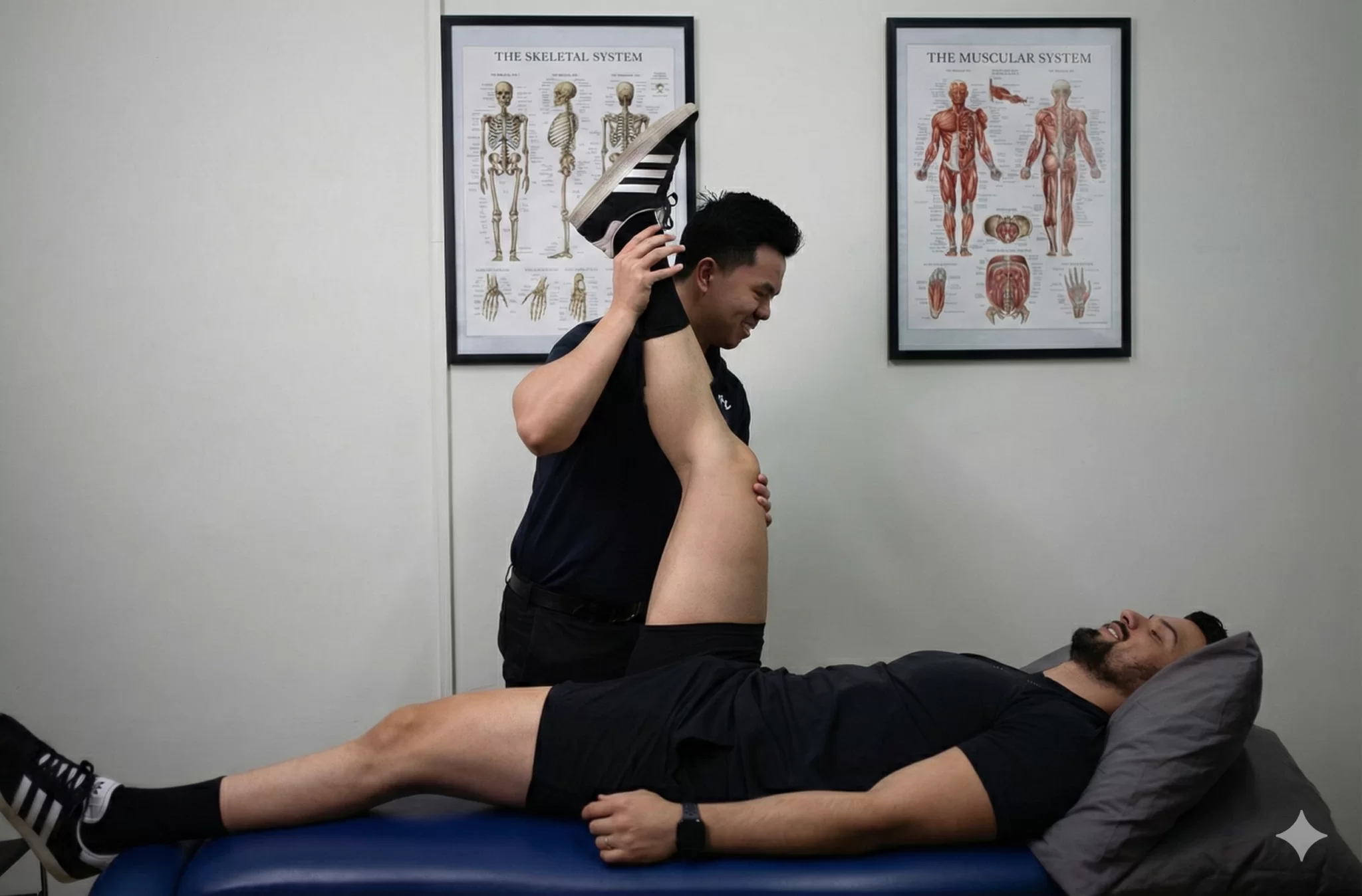
An active lifestyle around Balgowlah and Manly often includes coastal runs, surf sessions, social netball, and long commutes. When pain or a sudden strain interrupts those routines, a first physiotherapy appointment can feel like a big unknown. Knowing what typically happens in session one helps you arrive prepared and leave with a clear plan. This article explains how a thorough assessment is structured, which treatments are commonly used in session one, how your initial home program is built, and what safe early progress looks like for runners, surfers, and team sport athletes in the Northern Beaches.
- Inside a Thorough Musculoskeletal Assessment
Your physio will start with a detailed history to map out your condition. Expect questions about the onset of symptoms, aggravating and easing factors, a 24-hour pattern of pain or stiffness, training volume across the past two to three weeks, footwear changes, desk setup, and sleep quality. Objective testing may include range-of-motion measurements with a goniometer, manual muscle testing or handheld dynamometer checks, neuro screening of reflexes and dermatomes, palpation to locate irritability, and functional tasks like a single-leg squat or hop test. Local options include Fixio in Balgowlah, among others listed in community directories.
Many new patients assume imaging is automatically required, but most common overuse conditions respond well to a careful clinical exam and early loading strategy. Scans can be useful when red flags or suspected fractures are present, but mild degenerative findings on imaging often correlate poorly with day-to-day function. The immediate goal is to identify load tolerance and meaningful baselines: which movement patterns are provocative, how strength compares side to side, and whether a change-of-direction task or a heel raise reproduces symptoms. Those baselines guide which exercises start on day one and how quickly to progress them.
- Local Scenarios: How Assessment Shapes Care
A runner building mileage along the Manly coastal path might wake to Achilles stiffness on the first steps out of bed. A history often shows a recent spike in hills or pace work, with limited calf strength endurance. On exam, the single-leg calf raise count is reduced on the sore side, and a double-leg hop test reproduces tendon pain. Early isometric calf holds and tempo heel raises are introduced to load the tendon without provoking a flare, while weekly mileage is trimmed and hills are temporarily limited. Full rest may briefly calm symptoms, but targeted loading drives tendon adaptation more reliably than inactivity.
A surfer with aching at the front of the shoulder after longer paddles may present with limited thoracic extension and weak lower trapezius activation. Testing may reveal pain with a Neer or Hawkins-Kennedy maneuver and fatigue in prone Y or T positions. Session one often focuses on scapular control drills, rotator cuff endurance work in side-lying, and thoracic mobility with a foam roller. Short-term taping can cue better shoulder blade positioning during daily tasks, and we adjust paddling volume for the first week to respect irritability.
- Treatment You Might Experience in Session One
Hands-on techniques can help modulate pain and improve movement quality in the short term. We may use joint mobilizations to the ankle, hip, or thoracic spine; soft tissue release for the calf or hip flexors; and dry needling when appropriate to reduce guarding. These methods aren’t the finish line; they buy you a window to practice the movement or loading pattern your tissue needs. If your knee is irritated during a squat, for example, patellofemoral taping, a slightly wider stance, and a hip-hinge focus can make the pattern comfortable enough to train.
Your exercise plan usually starts immediately. For tendons, that might mean starting with isometrics, then progressing to slow eccentrics, and finally heavier calf or hamstring work. For lumbar pain with stiffness after sitting, we may test and assign repeated extension in lying or simple McGill-style core drills like the dead bug if they reduce symptoms. Neural mobility exercises may be included for mild nerve irritability. Your physio will set the initial dosage and frequency, then adjust it at follow-up based on your symptom response and performance.
- Building a Practical First Week Plan
A clear seven-day plan reduces guesswork. Expect guidance on activity modifications, such as capping runs on flat paths, swapping hills for bike sessions, or breaking up sitting with micro breaks every 30 to 45 minutes. A load diary helps capture what you do and how you feel 12 and 24 hours later, which matters for conditions like plantar fascia irritation or Achilles tendinopathy. Sleep quality, stress, and basic nutrition all influence recovery. If you use training apps or a GPS watch, bring recent data to your appointment so adjustments are grounded in real numbers.
Your clinician should explain normal post-exercise soreness versus warning signs of a flare. Light, short-lived muscle soreness after a new exercise is common. A sustained uptick in night pain, swelling that limits weight bearing, or progressive numbness or weakness warrants direct contact with the clinic or your physician. After interventions like dry needling, you may receive simple aftercare: brief relative rest for the needled area, gentle movement through pain-free range, and monitoring for unusual redness or warmth.
- Progressing Back to Running or Sport
Criteria-based progression is safer than a calendar-based return. For runners, common markers include quality single-leg squat control, a comfortable single-leg calf raise test, and the ability to complete low-impact plyometrics without symptom spikes. A walk-jog progression on level ground often precedes hills or intervals. Northern Beaches routes include rolling terrain, so reintroduce climbs late in the sequence and avoid back-to-back hard days until your tendon or joint tolerates the load.
For court or field sports, the path moves from linear drills to cutting, deceleration, and change-of-direction tasks. Simple hop testing and Y Balance checks can reveal readiness gaps that don’t show up during straight-line jogging. There is a trade-off between bracing or heavy taping and long-term control; external supports can help early, but neuromuscular training and strength progressions restore durable performance. A good plan makes that handoff clear.
Common Mistakes That Slow Recovery
Aggressively stretching an irritable tendon is a common early mistake. If a calf stretch sharply reproduces Achilles pain, switch to isometric loading and mid-range calf work, then recheck stretching later. Another misstep is fixing technique without addressing capacity; changing your running cadence may help, but underpowered calves or glutes still need progressive strengthening. Finally, jumping straight back to the Spit Bridge hills or beach stairs after a pain-free day can trigger a setback. Aim for two or three calm sessions at a given level before changing two variables at once.
Relying only on passive care is the other trap. Manual therapy can create room to move, but adaptation happens when you lift, lunge, hinge, push, and pull through tolerable ranges with good form. Consistency matters more than perfection. Bring your everyday shoes, any orthotics you use, and a list of any recent programs you’ve tried to your appointment. The more context your physio has, the faster they can identify the right entry point and build a plan that fits the way you train, commute, and play.
Your first physiotherapy session in Balgowlah should leave you with three things: a clear working diagnosis, a starter set of exercises with exact dosages, and a short list of activity adjustments. Over the next week, log what you do and how you feel the following morning, and come to follow-up ready to report those details. With criteria-based progressions and honest load tracking, most people return to their runs, paddles, or games with fewer flare-ups and a better understanding of how to keep training on the Northern Beaches without losing momentum.
